


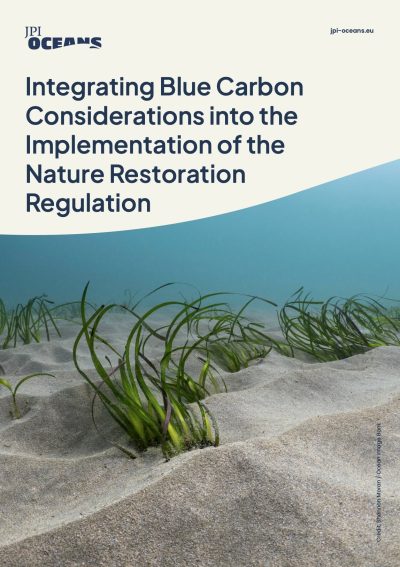
Integrating blue carbon ecosystems into National Nature Restoration Plans, improving their monitoring and strengthening policy coordination are key to ensuring their effective restoration. This is highlighted in a new policy brief by the JPI Oceans Blue Carbon Knowledge Hub, to which The Green Tank contributed.
The EU Nature Restoration Regulation sets binding targets for restoring degraded ecosystems. Seagrass meadows, salt marshes and macroalgal forests can contribute to achieving these targets, delivering benefits for both climate and biodiversity. However, their contribution needs to be better reflected in the planning and implementation of restoration measures.
The policy brief, titled “Integrating Blue Carbon Considerations into the Implementation of the Nature Restoration Regulation”, puts forward recommendations to better integrate blue carbon ecosystems into the implementation of the Regulation. Specifically, it calls for (among others):
- Including blue carbon ecosystems in National Nature Restoration Plans, with appropriate targets and indicators.
- Strengthening monitoring and data collection to assess their ecological status and benefits for climate and biodiversity.
- Improving policy coordination and strengthening cooperation between countries.
- Securing adequate, long-term funding from public and private sources for their restoration and monitoring.
The brief was developed by the Policy Working Group of the JPI Oceans Blue Carbon Knowledge Hub, led by Ireland and involving experts from Germany, Greece, Malta, Norway, Portugal and the United Kingdom. The Green Tank contributed through its participation in the working group.
It is the third and final policy brief in a series examining how blue carbon can be integrated into EU policies. The two previous briefs focused on the Marine Strategy Framework Directive and the Land Use, Land-Use Change and Forestry (LULUCF) Regulation.
Read the policy brief here.


