


Latest news
New policy brief on blue carbon and nature restoration
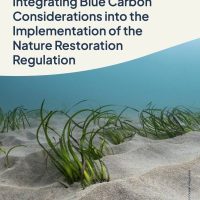
Integrating blue carbon ecosystems into National Nature Restoration Plans, improving their monitoring and strengthening policy coordination are key to ensuring their effective restoration. This is highlighted in a new policy brief by the JPI Oceans Blue Carbon Knowledge Hub, to which The Green Tank contributed.
The Green Tank’s report on the Vertical Corridor featured in German media
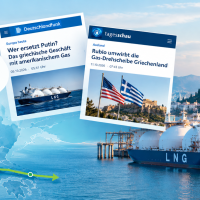
Europe aims to end all Russian gas imports by November 2027. Greece aspires to play a central role in this effort, becoming a gateway for US liquefied natural gas (LNG) to Southeastern and Central Europe through the Vertical Corridor. But how much of this new infrastructure is actually needed, and what will it cost consumers? These questions were explored in two German media reports by Jasper Riemann featuring Nikos Mantzaris, Policy Analyst Lead and co-founder of The Green Tank.
Joint letter calling for the implementation of ETS2 in 2028 without further delay
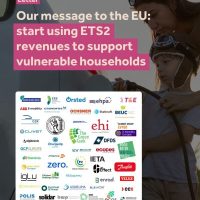
More than 50 companies, business associations and civil society organisations, including The Green Tank, have co-signed a joint letter calling on EU Member States to implement ETS2 in 2028, as agreed, without further delay. The Green Tank has signed the letter both as an organisation and as part of the LIFE Effect consortium.


