


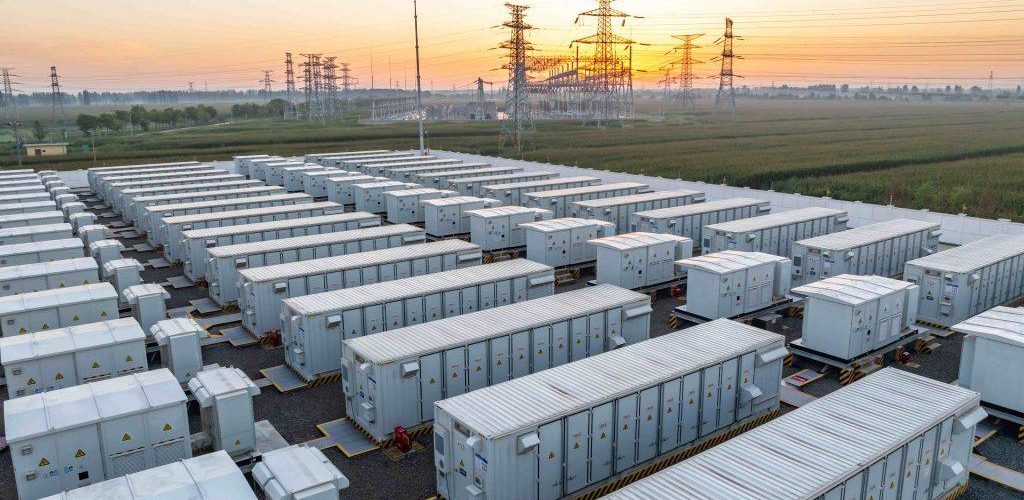
Batteries are already helping to reduce the amount of renewable energy being lost in Greece, while also reducing the need for electricity generation from costly fossil gas. However, the country is still far from the desired level of battery deployment. This is highlighted by data from IPTO’s day-ahead scheduling analysed by The Green Tank and featured in an article by Mahi Tratsa in To Vima tis Kyriakis and ot.gr.
In August, renewable energy curtailment reached 158.6 GWh. Without the batteries participating in the power system, an additional 28.8 GWh of renewable energy would have been lost, increasing total curtailment by 15.4%. However, the scale of the curtailment problem remains significant: from April, when the first battery began operating, through August, batteries prevented 78.3 GWh of renewable energy from being curtailed. This accounted for just 5% of total curtailment over the period, which reached 1,495 GWh.
At the same time, in August, batteries returned 44.9 GWh to the power system, avoiding an equivalent amount of generation from costly fossil gas-fired plants — once again, a relatively small amount compared with total fossil gas generation.
The scale of the challenge is underscored by the fact that, “despite the surge in renewable energy generation in 2026, gas-fired generation remains at very high levels, only slightly below the record-high levels recorded in 2025. As a result, wholesale electricity prices are significantly higher than they could otherwise be,” Nikos Mantzaris told To Vima.
As he stressed, accelerating battery deployment is the greatest hope for correcting this distortion, benefiting both households and the competitiveness of the Greek economy.
Read the full article [in Greek] by Mahi Tratsa in To Vima tis Kyriakis (06.09.2026) and ot.gr (08.09.2026).


