


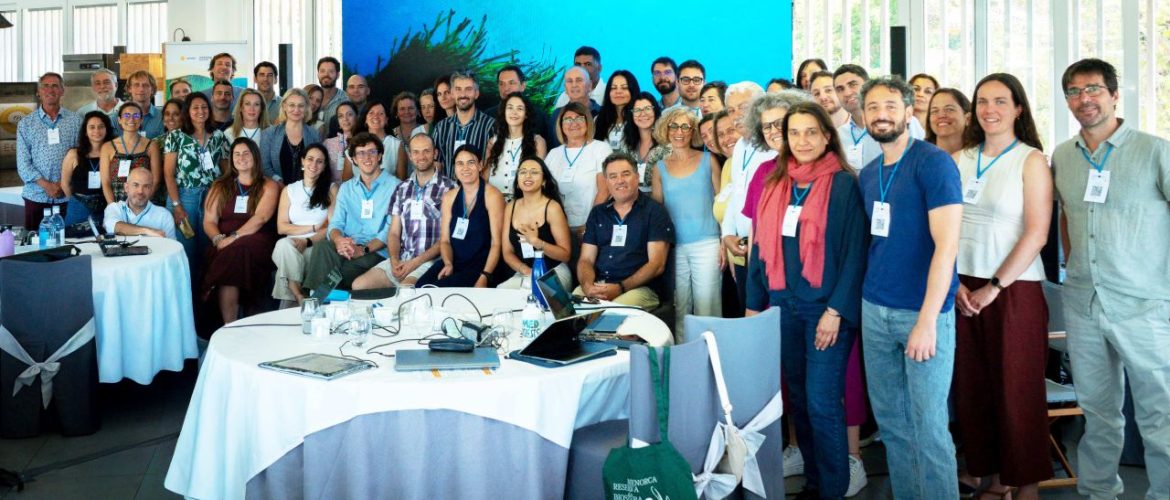
From 8 to 10 June 2026, The Green Tank joined fellow partners and associated stakeholders at the final conference of the Interreg Euro-MED ARTEMIS project in Menorca, Spain, contributing to discussions on advancing seagrass restoration across the Mediterranean.
Organised by project partners IME-OBSAM and the project coordinator Plan Bleu, the conference brought together researchers, public authorities, businesses and civil society organisations to showcase the project’s achievements and discuss the next steps for strengthening the restoration and conservation of Posidonia oceanica meadows and other marine ecosystems.
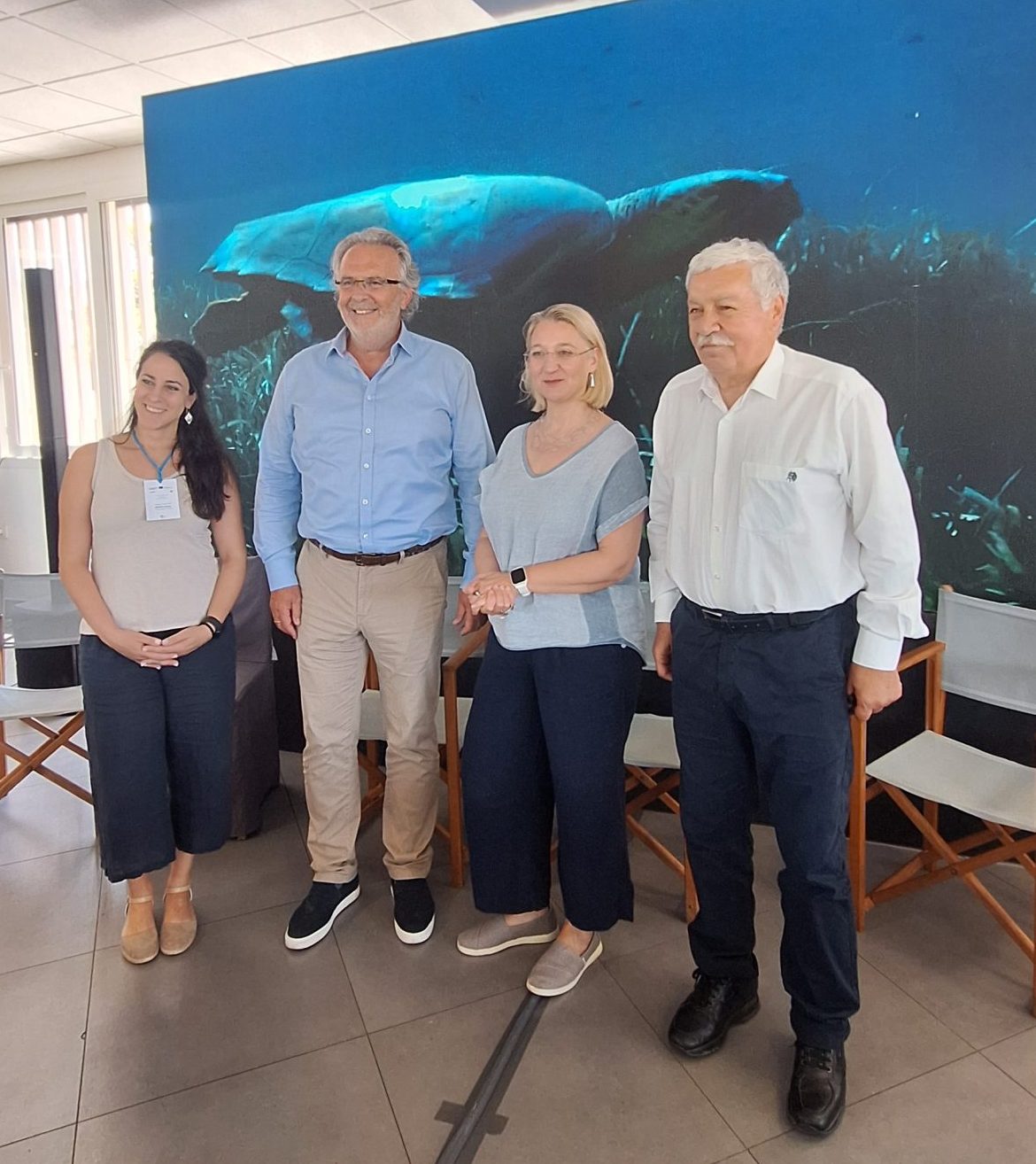 Representing Greece were the Hellenic Centre for Marine Research (HCMR) and The Green Tank, alongside the Vice Governor for Environment of the Region of Crete, Nikolaos Xylouris, and the Mayor of Sitia, Georgios Zervakis, who shared experiences from the implementation of ARTEMIS actions at Atzikiari Bay, the project’s pilot site in Crete.
World Oceans Day marks the opening of the conference
The conference opened with a public event celebrating World Oceans Day in Ciutadella, Menorca, attended by representatives of local and regional authorities, including the Mayor of Ciutadella, Maria Jesús Bagur, the President of the Institut Menorquí d’Estudis, Joan Pons Torres, representatives of the Government of the Balearic Islands and the Island Council of Menorca, as well as local environmental organisations.
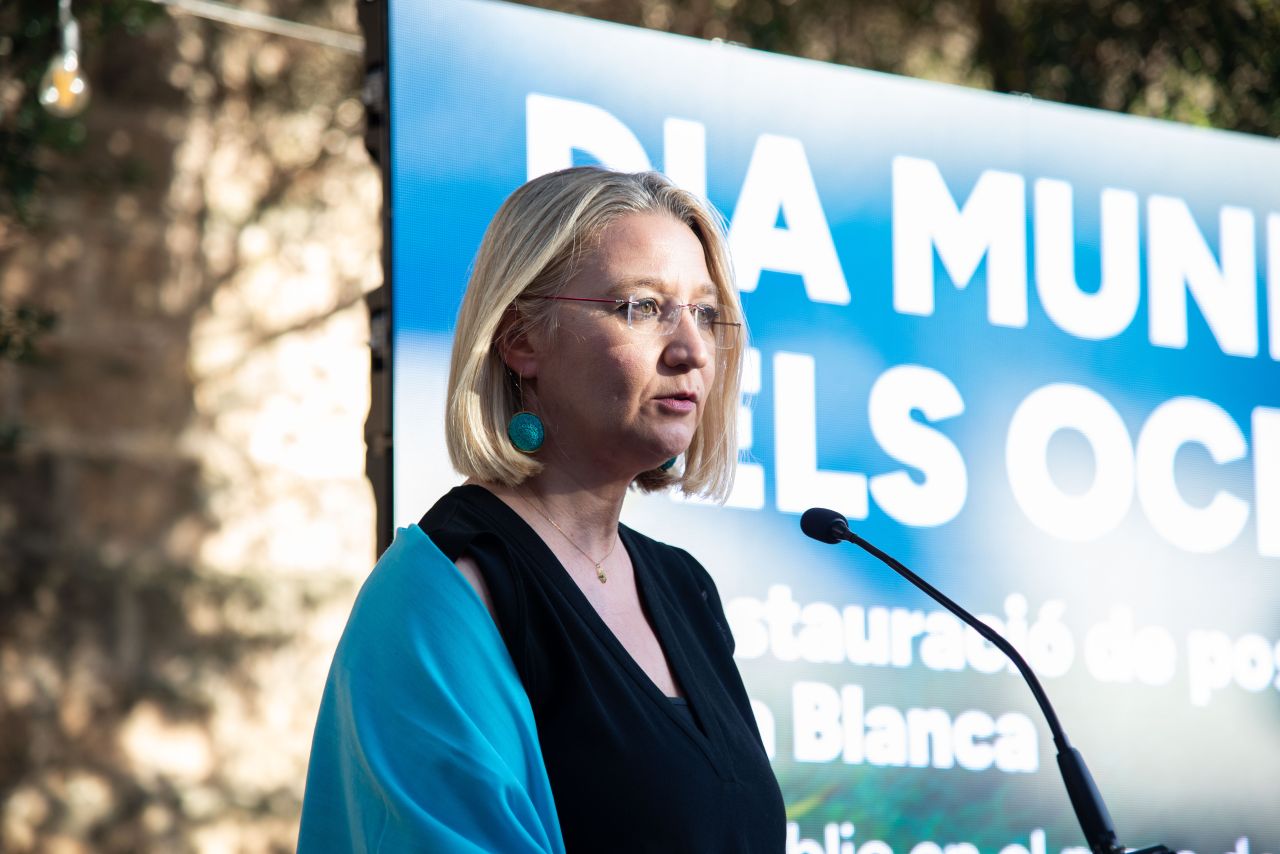 On behalf of the ARTEMIS partnership, Ioli Christopoulou, co-founder and Policy Director of The Green Tank, delivered opening remarks, highlighting the importance of cross-border cooperation in accelerating the protection and restoration of Mediterranean seagrass meadows.
Presenting ARTEMIS results on stakeholder engagement
During the first day of the conference, participants presented the results of the actions implemented across the four ARTEMIS pilot sites in the Mediterranean, including Atzikiari Bay in Sitia, Crete, where the Seagrass Ecology Lab of the Institute of Oceanography at the Hellenic Centre for Marine Research (HCMR) coordinated seagrass restoration activities. The scientific methods and tools developed through the project for the design, monitoring and evaluation of restoration interventions were also presented, highlighting the importance of science-based approaches in ensuring the effectiveness and integrity of restoration actions.
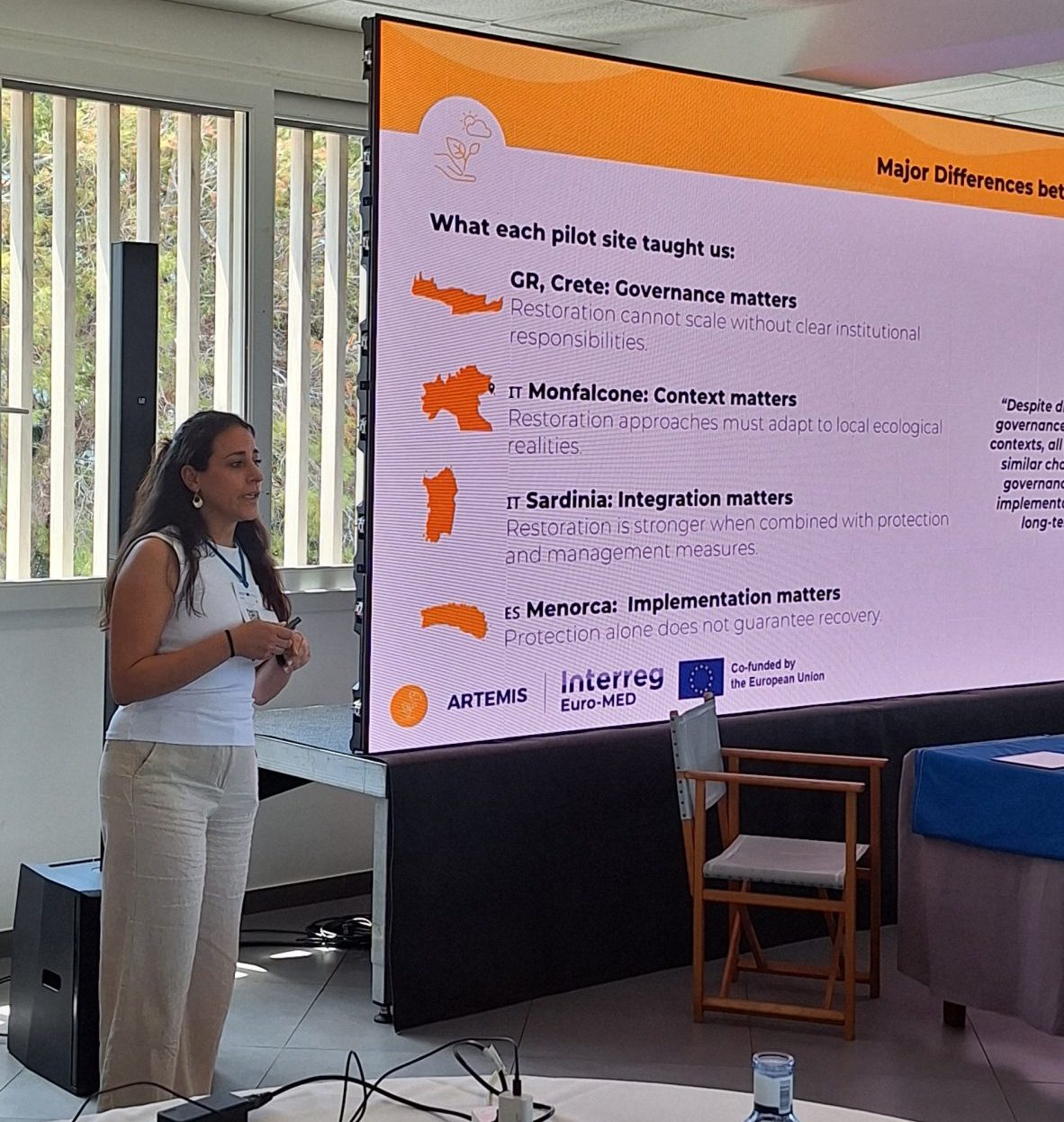 In this context, Dimitra Syrou, Nature Policy Associate at The Green Tank, presented ARTEMIS’ work on stakeholder engagement strategies. Drawing on the experience gained from the project’s pilot sites, she shared key lessons on identifying and engaging the right stakeholders from the early stages and throughout the restoration process. She emphasised that meaningful stakeholder participation is a prerequisite for the success, long-term sustainability and social acceptance of restoration projects. She also highlighted the cross-cutting role that the stakeholder engagement methodology played throughout ARTEMIS, contributing significantly to the project’s implementation and outcomes.
Presenting policy recommendations for seagrass restoration
The Green Tank also played an active role in discussions on the policy and governance dimensions of restoration. During a dedicated session on policy and governance, Ioli Christopoulou presented the ARTEMIS policy recommendations developed over the course of the project’s implementation.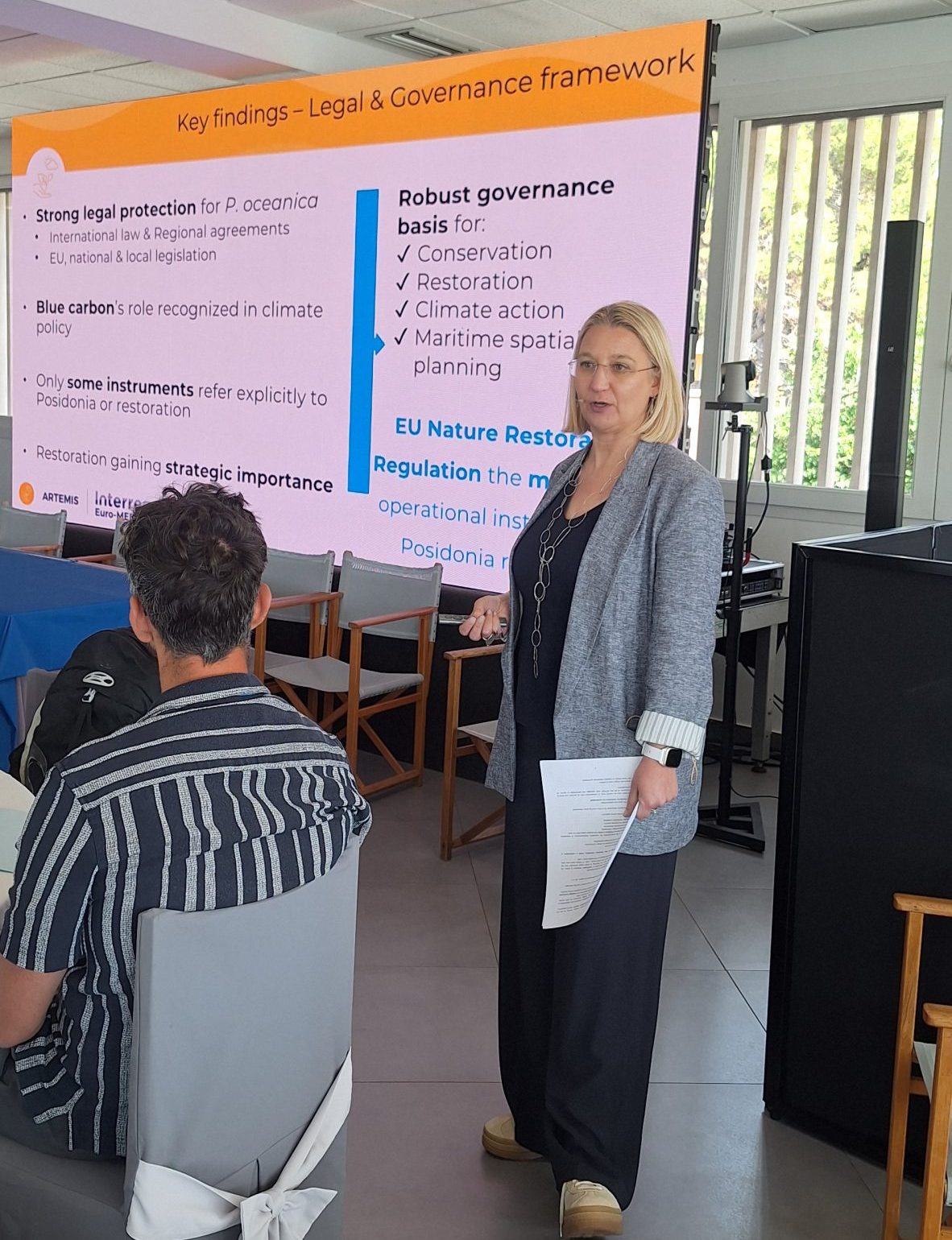
The recommendations focus on four key areas:
- Strategic planning and governance alignment;
- Operational and institutional frameworks;
- Public financing mechanisms;
- The responsible development of market-based financing instruments.
The presentation highlighted the need for coherent governance structures, stronger policy integration and sustainable financing solutions to enable large-scale restoration efforts across the Mediterranean, particularly in light of the implementation of the EU Nature Restoration Regulation.
The role of public authorities in accelerating restoration
On the final day of the conference, Plan Bleu and The Green Tank co-organised a roundtable discussion on strengthening policy frameworks to accelerate seagrass restoration and secure long-term financing.
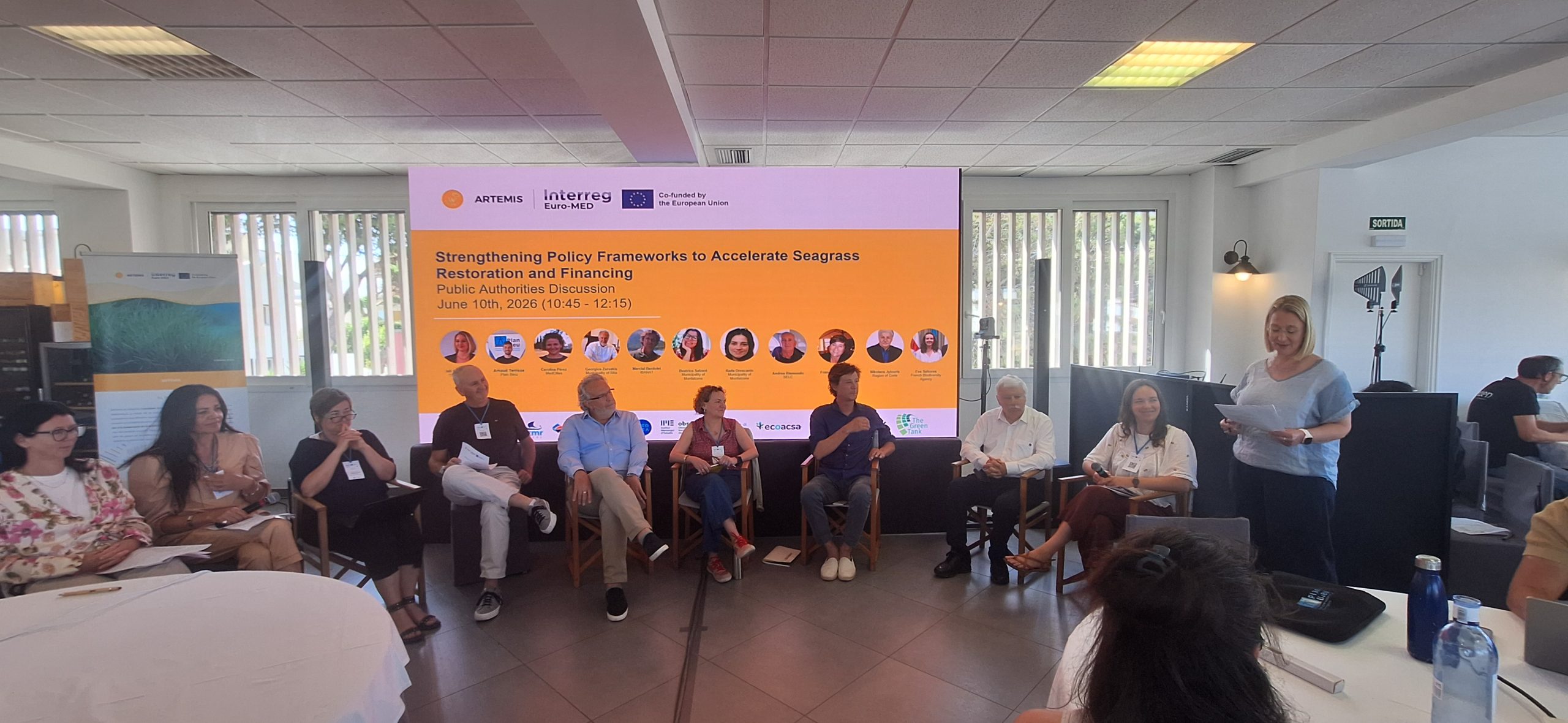 Moderated by Ioli Christopoulou, the discussion brought together representatives of national, regional and local authorities, biodiversity agencies and Mediterranean networks, including the Office français de la biodiversité, the Region of Crete, the Government of the Balearic Islands, the Municipality of Sitia, the Municipality of Monfalcone and the MedCities network.
While participants reflected different starting points and experiences, they also identified common challenges faced by public authorities in advancing Posidonia restoration across the Mediterranean. The discussion highlighted the opportunities that can emerge when key enabling conditions are in place, including stronger coordination across levels of governance, long-term financing, knowledge exchange and capacity building, as well as meaningful citizen engagement and participation of local communities.
From discussion to practice
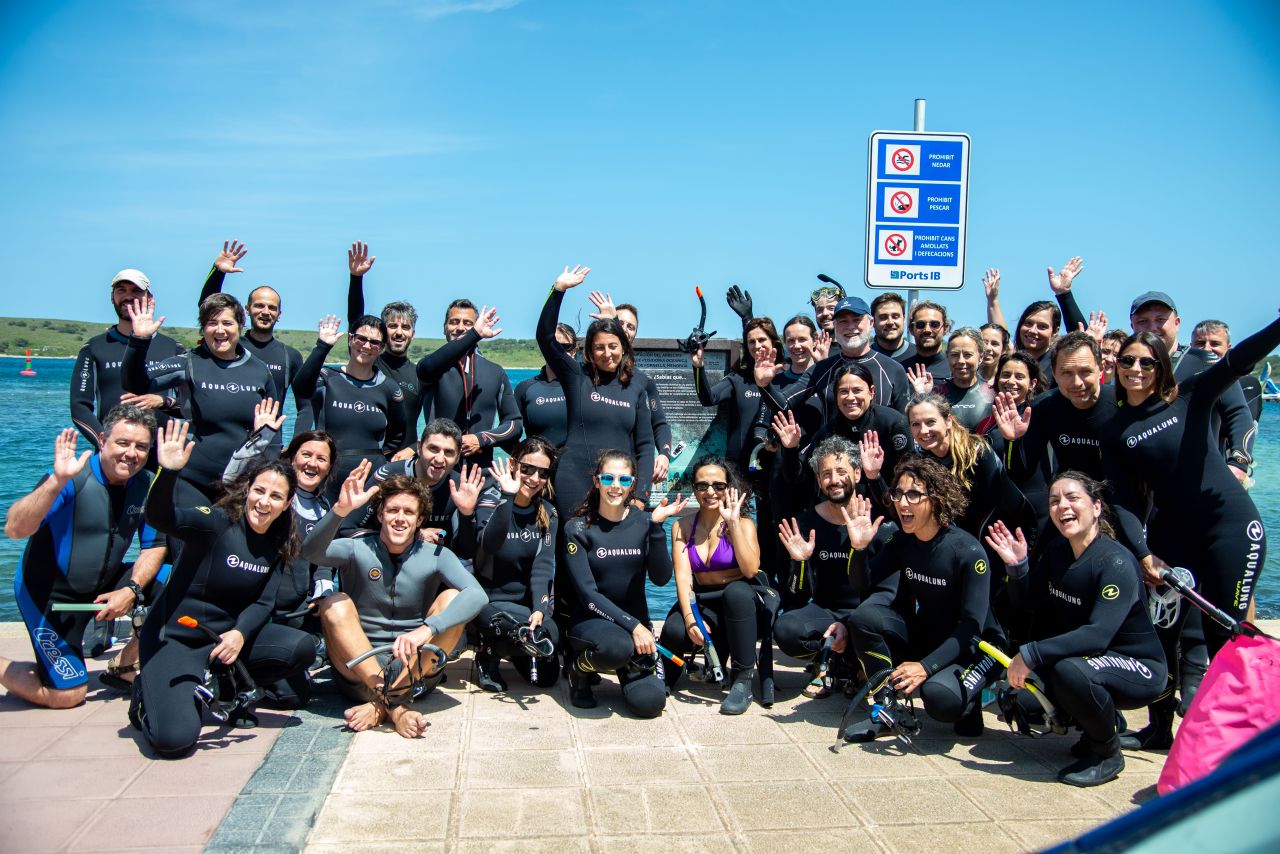
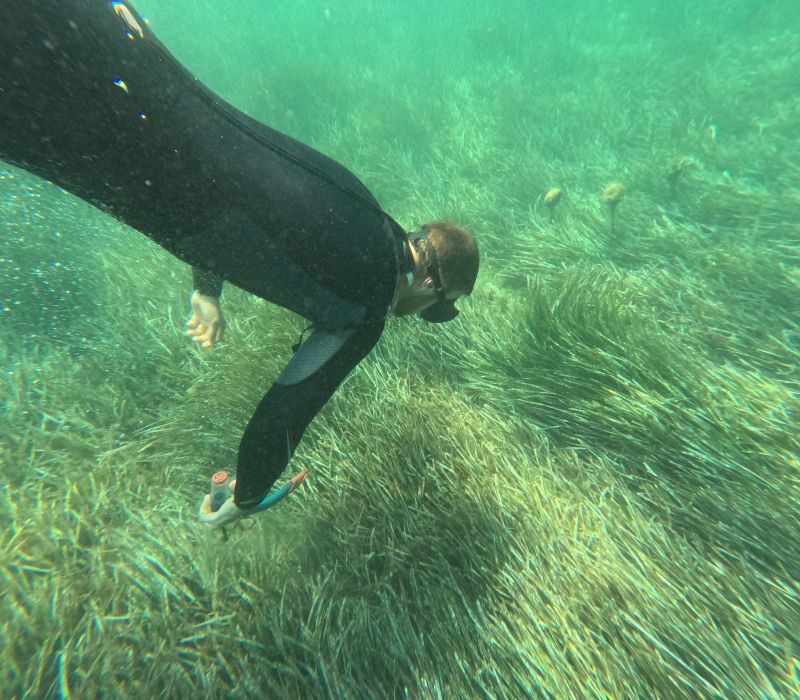
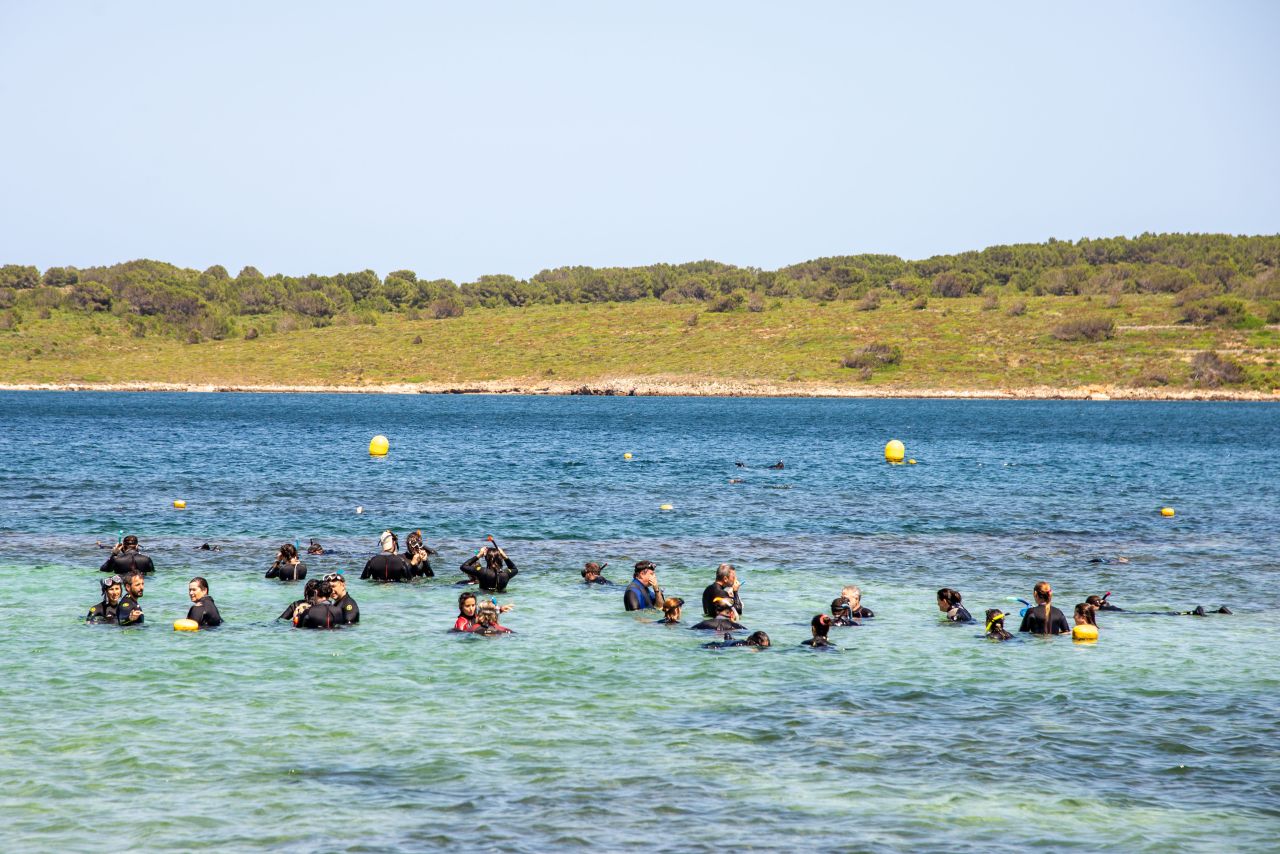
The conference concluded with a field visit to Fornells. The programme included snorkelling at a seagrass restoration site and a boat tour along Menorca’s northern coastline, providing participants with the opportunity to connect the policy discussions of the previous days with restoration efforts in practice.
The ARTEMIS final conference marked the conclusion of two and a half years of collaboration, while also laying the groundwork for future efforts to restore Mediterranean seagrass meadows. The knowledge, tools, partnerships and policy recommendations developed through the project constitute a valuable legacy for the continued protection and restoration of these vital ecosystems.
The Interreg Euro-MED ARTEMIS project (Accelerating the Restoration of Seagrass Meadows in the Mediterranean Area through Innovative Ecosystem-Service Based Solutions) aims to improve the restoration techniques of Posidonia oceanica meadows, assess the ecosystem services they provide, and create innovative techniques for integrating them into both policy-making and investment decisions. The project is implemented by ten partners, with Plan Bleu as the project coordinator. Partners from Greece include the Hellenic Centre for Marine Research (HCMR) and the environmental think tank, The Green Tank. Associated partners include the Region of Crete and the Organization for the Natural Environment and Climate Change (NECCA).


