


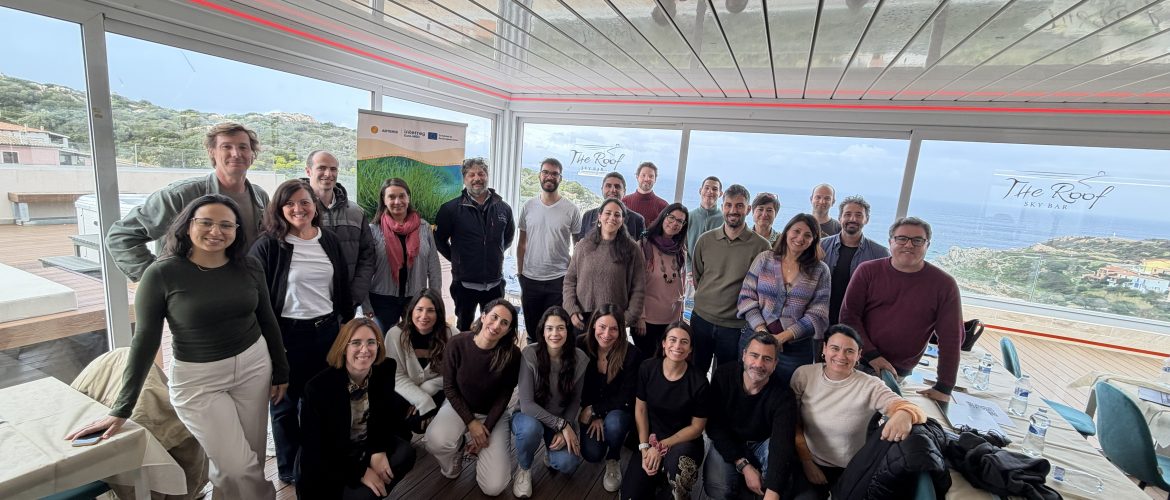
Two important and inspiring days for the ARTEMIS Interreg Euro-MED Natural Heritage project took place on 3–4 March 2026 in Santa Teresa Gallura, Sardinia, where partners met at the project’s Sardinian pilot site, the Capo Testa – Punta Falcone Marine Protected Area.
The meeting provided a valuable opportunity for partners to review project progress, exchange knowledge and experiences, and discuss next steps as ARTEMIS enters its final phase.
Accelerating Posidonia restoration in the Mediterranean
A key focus of the discussions was a shared priority: accelerating the restoration of Posidonia seagrass meadows, one of the Mediterranean’s most important marine ecosystems.
Often described as a “hidden treasure of the sea,” Posidonia oceanica meadows play a crucial role in supporting marine biodiversity, protecting coastlines, and storing carbon.
Partners shared lessons from pilot restoration actions and discussed key questions for the next phase of the project:
- What are the main lessons from pilot restoration efforts?
- How can ambitious, science-based restoration plans be developed and adapted to local conditions while contributing to national and EU nature targets?
- How can long-term scientific monitoring, institutional capacity, and stakeholder engagement be strengthened?
- What mechanisms can ensure sufficient and predictable funding for large-scale restoration?
From The Green Tank team, Dimitra Syrou presented the project’s ongoing policy proposals, developed in collaboration with Plan Bleu, aimed at improving the institutional framework and activating financial and economic tools to enhance protection and scale up Posidonia restoration across the Mediterranean. She also provided an update on the development of Greece’s national framework for Posidonia restoration, a process conducted in collaboration with the Seagrass Lab of the Hellenic Centre for Marine Research (HCMR).
Beyond biodiversity, participants emphasized that restoring Posidonia meadows is an investment in climate resilience, natural capital, and the future of Mediterranean coastal communities.
Exploring landscapes that embody the link between people and nature
The second day began with a visit to the iconic Valle della Luna, a striking coastal landscape that reflects the delicate balance between nature, people, and time. Once known as a refuge for alternative communities, the area is gradually rediscovering equilibrium between conservation, tourism, and local life.
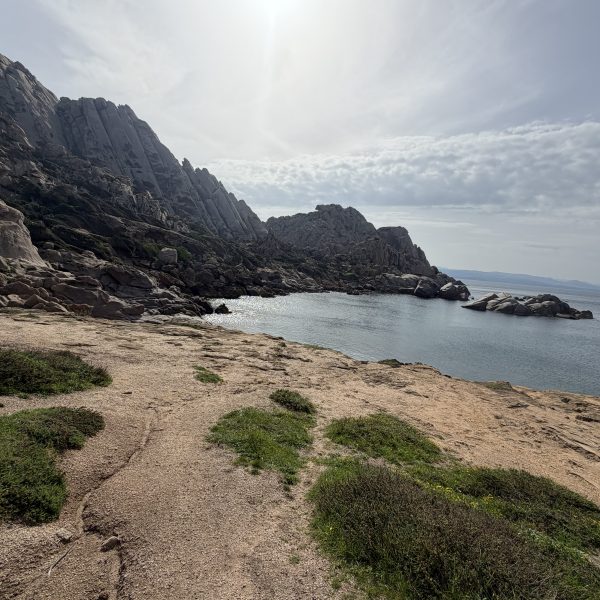 The visit offered an opportunity to reflect on what it truly means to protect and restore nature—a central theme of the ARTEMIS project.
Communicating restoration: connecting science with people
A highlight of the meeting was a peer learning session led by sustainability and communications expert Thomas Kolster. Through interactive exercises, partners explored ways to strengthen narratives and communication around seagrass restoration.
The session emphasized that environmental projects need to connect with people’s everyday realities to gain the support of businesses, institutions, and local communities. Working in interdisciplinary teams, participants practiced translating scientific concepts into clear, relatable stories that showcase the real-life value of restoration.


