


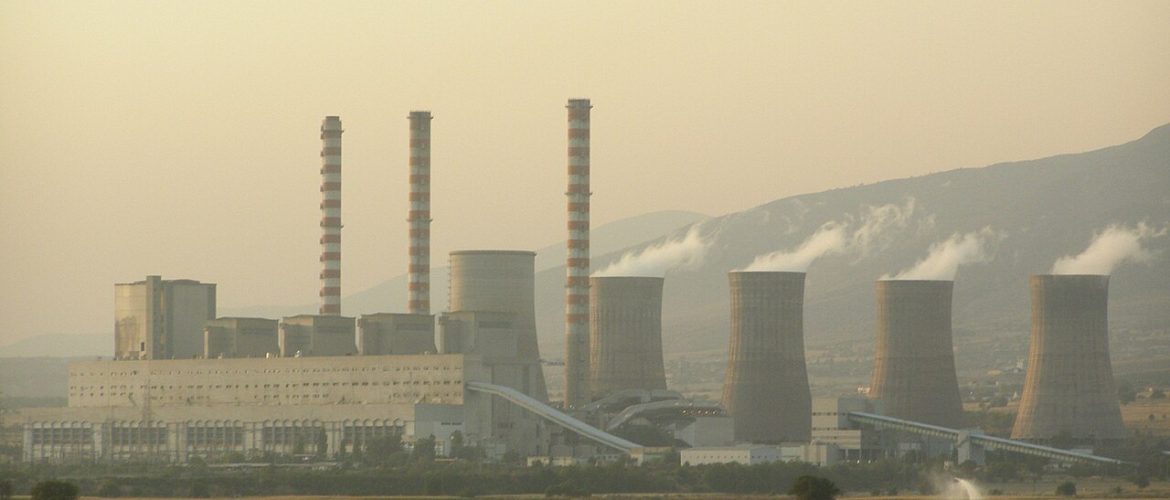
In an article on energypress.gr titled “Lignite is leaving, but the questions remain,” Nikos Mantzaris reflects on the permanent shutdown of the Agios Dimitrios Power Plant, the largest lignite-fired plant in Greece and one of the largest in the Balkans, after 42 years of operation.
The article highlights the plant’s decisive role in the country’s economic development, as well as its significant environmental footprint in terms of CO₂ emissions, air pollutants, heavy metals, and natural resource consumption.
Despite the clear benefits of its closure for the climate and environment, Mantzaris stresses that critical challenges remain unresolved: the just transition of Western Macedonia, the future of district heating in Kozani, and the energy mix that will replace lignite at the national level.
The article concludes that public debate should focus on realistic solutions for the post-lignite era, rather than recycling outdated disputes about a potential “return” of lignite.
Read the full article [in Greek] here.
English translation below:
Agios Dimitrios Power Plant Closure: Lignite Phase-Out Leaves Critical Energy Transition Questions Unanswered
After 42 years of continuous operation, the Agios Dimitrios Thermal Power Plant permanently shut down on May 15. It was the largest lignite-fired power plant in Greece and the second largest in the Balkans — after Bulgaria’s Maritsa East 2 — it now passes into history.
With a gross nominal capacity of 1,595 MW, Agios Dimitrios was the flagship of PPC’s lignite fleet and played a major role in Greece’s economic development. For decades, thousands of workers at both the plant and the surrounding mines kept the country powered, and their contribution deserves our recognition and gratitude.
Yet this contribution came at a significant environmental and public health cost.
Since the launch of the EU Emissions Trading System (ETS) in 2005, the plant emitted around 200 million tonnes of CO₂ — nearly equivalent to Greece’s total emissions from all sectors over the last three years combined.
For much of the past two decades, Agios Dimitrios ranked among Europe’s ten most polluting facilities. Its worst year was 2012, when it released 14.7 million tonnes of CO₂, almost matching the current annual emissions of Greece’s entire electricity and heat production sector. That year, it was the seventh largest polluter in the EU-27.
The environmental burden extended well beyond greenhouse gases. According to official EU data for the period 2007–2024, the plant emitted 366,177 tonnes of sulfur oxides (SOx), 207,626 tonnes of nitrogen oxides (NOx), and 14,363 tonnes of particulate matter, significantly degrading air quality in Western Macedonia and other regions.
Heavy metal pollution was equally devastating. Between 2007 and 2024, the plant emitted 7,963 tonnes of mercury and consistently ranked among Europe’s top emitters of copper, chromium, and arsenic.
Water consumption was another major issue. From 2013 to 2025, the plant is estimated to have consumed approximately 204 million cubic meters of water — enough to fully cover the needs of around 87,500 citizens over the same period.
Therefore, the closure of the Agios Dimitrios lignite plant is clearly great news for the climate, public health, and ultimately electricity consumers, as the facility had been operating at a financial loss for years, adding costs to electricity bills.
At the same time, major challenges remain unresolved.
The sustainable transition of Western Macedonia’s economy and the replacement of lost jobs are still very far away from the goals set in 2020. Concerns are growing as there will be no dedicated EU funding for Just Transition in the 2028–2034 programming period, while the Greek government has been allocating an increasingly smaller share of ETS revenues to support lignite regions in recent years.
Meanwhile, Kozani — which relied on the plant for district heating for 33 years — is expected to return to expensive and polluting oil to cover its heating needs next winter. More importantly, it remains unclear for how long oil will serve as a “transition fuel” for district heating, since the implementation of the also expensive and polluting fossil gas “solution” -chosen unfortunately by the national and local authorities for district heating in the post-lignite era-, continues to face delays.
At the national level, the key question is of a different nature: what will replace the electricity generation capacity lost with the closure of Agios Dimitrios? Will Greece accelerate investment in renewable energy, or will the phase-out of lignite further strengthen dependence on fossil gas — a fuel that is already driving up electricity prices in Greece and pushing the country further away from its climate targets?
It is time for a serious public debate — both locally and nationally — focused on providing credible answers to these challenges, instead of perpetuating pointless discussions about the unrealistic prospect of a lignite “comeback”.


