


State of Climate in Greece 2025: The Electricity Generation Sector
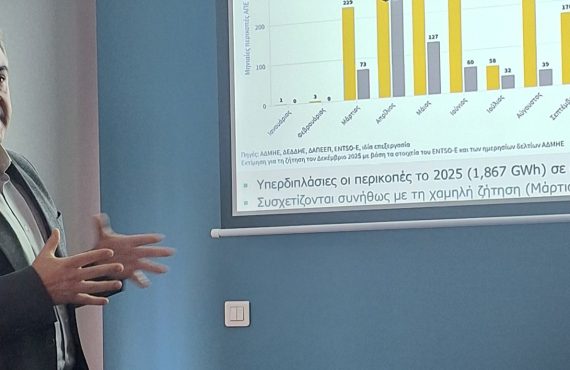
As part of the State of Climate in Greece for 2025, conducted by scientists from the Institute for Environmental Research and Sustainable Development at the National Observatory of Athens and organized by the Climatebook information hub, Nikos Mantzaris presented the results of the Green Tank analysis for the electricity generation sector.

Stagnation in self-production and energy communities after the transition to net billing
1,747 energy communities, but only 18 new project applications in 6 months. Central Macedonia is the “champion” in electrified capacity, while in Western Macedonia for every 1 MW electrified, 3.6 MW are cancelled. The 1 GW “barrier” in self-generation was broken, however, from the ministerial decision on net billing (October 2024) to September 2025, only 16.5 MW of projects implementing the new mechanisms, were connected.
Why does Greece’s electricity market remain so expensive?
Despite the increase in electricity generation from Renewable Energy Sources (RES), Greece consistently remains among the most expensive countries in Europe in the day-ahead electricity market (DAM). According to a new analysis by The Green Tank, which also compares Greece with Portugal, the main reasons are the country’s growing dependence on fossil gas and the lack of energy storage infrastructure.

Greece ranks 6th in ETS emission reductions over 2005–2024
Despite notable progress, 2024 saw an increase in emissions from power generation in Greece due to fossil gas and stagnation in industrial emissions. In contrast, the EU-27 achieved a 20-year low in emissions in both sectors. Greece also ranked first among EU-27 countries in shipping emissions, while emissions from aviation doubled compared to 2013.

Social Equity in Protected Areas – The Green Tank Contributes to a Global Study
The Green Tank contributed to a major study assessing the governance of Protected and Conserved Areas (PCAs) worldwide. The study was led by a team from the International Institute for Environment and Development (IIED), with input from the Fidelio program and under the scientific guidance of Dr. Nicoletta Jones (Warwick University / University of Cambridge).

Greece and ETS2: What It Means for Households and How to Protect the Most Vulnerable
Spending by vulnerable households in Greece is expected to increase by up to EUR 1.6 billion between 2027 and 2032 due to the implementation of the new Emissions Trading System (ETS2) for buildings and road transport. A new study by The Green Tank and Facets recommends a mix of immediate and long-term measures, costing up to EUR 15.5 billion, leveraging the Social Climate Fund (SCF) and other available resources to protect vulnerable households while also contributing to climate targets.

Who pays for the cost of capacity mechanisms? The European example and Greece’s options
A new brief by The Green Tank analyzes the provisions of European legislation regarding capacity remuneration mechanisms (CRMs), outlines the technologies that other European countries are choosing to support via these mechanisms, and examines how these choices have so far affected consumers’ costs.

The youth of Greece’s lignite regions have a voice – Youth Summits in Kozani and Tripoli
Mapping the first open dialogue focusing on youth in just transition regions and their future in the post-lignite era.
Self-production in Greece approaches the 1GW milestone
However, the slowdown in both the electrification and new applications for self-production projects by citizens, energy communities and other stakeholders, recorded after the switch to the net billing scheme is worrisome, according to the new Green Tank review. The lignite region of Western Macedonia continues to face the biggest problem of grid space availability.

The Greek industry on the path to decarbonization
After years of stagnation, the two most polluting sectors of the Greek industry (cement production and refineries) are aiming to reduce their carbon footprint, in line with the NECP and EU priorities, despite concerns about their competitiveness.

Sectoral carbon budgets: How much greenhouse gases will the sectors of Greece’s economy emit by 2030?
This analysis by The Green Tank calculates the first sectoral carbon budgets based on the NECP projections and shows that in the five-year period 2026-2030 Greece will burden the atmosphere with 257 million tons CO2eq.
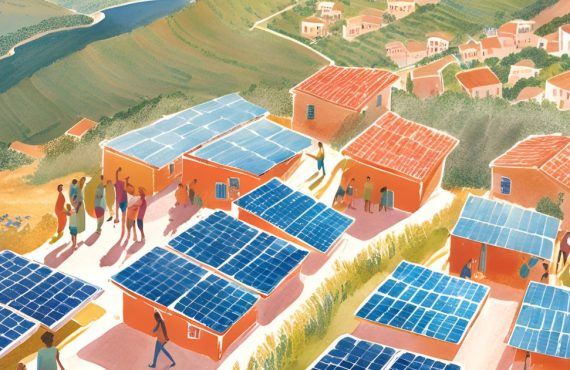
Self-produced energy in transition: How the new institutional framework is changing the landscape
The Green Tank's 6th Review on Energy Communities and Self-Production in Greece presents the most recent development, with data from the General Commercial Register (GEMI) until September 2024 and the Hellenic Electricity Distribution Network Operator until July 2024.
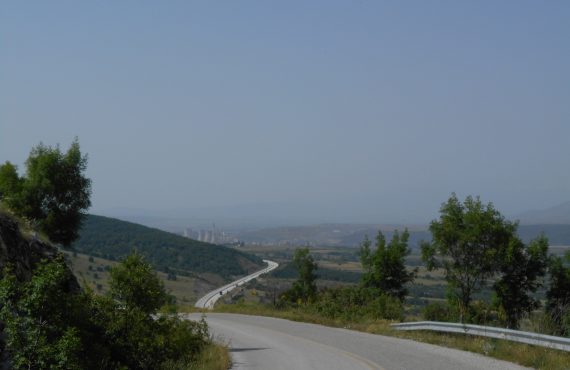
Gas-based district heating deadlocked: What are the viable solutions for Greece’s lignite cities?
The original gas-based plan is at an impasse. Alternatives based on renewables and eligible for EU funding need to be considered.
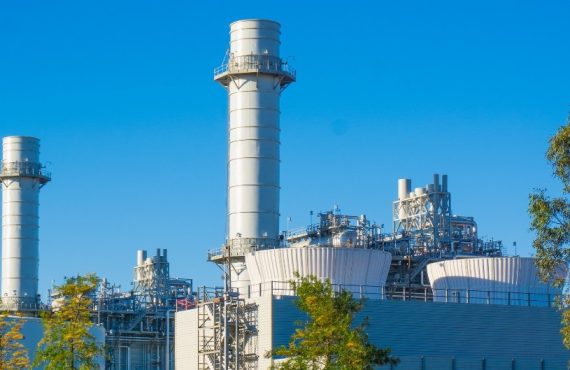
How much gas capacity does Greece need?
A new report by The Green Tank finds that over the past 1.5 year, meeting domestic demand has never required more thermal power plant capacity than that currently available by gas plants (6 GW).


