


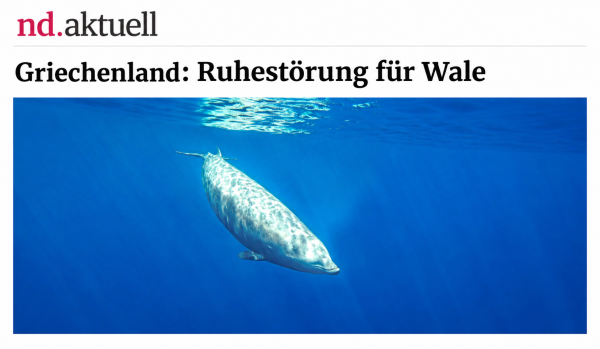
The Green Tank in the German press: Threats to Climate Targets and Uncertain Economic Benefits for Greece from Hydrocarbon Extraction
Plans to explore for and potentially extract fossil gas south of the Peloponnese and Crete pose risks to vulnerable marine mammals, while also raising questions about Greece’s climate commitments and the potential economic benefits. In an article published by nd-aktuell.de, Nikos Mantzaris, co-founder and lead policy analyst at The Green Tank, explains why developing new fossil gas deposits could undermine Greece’s path towards climate neutrality.
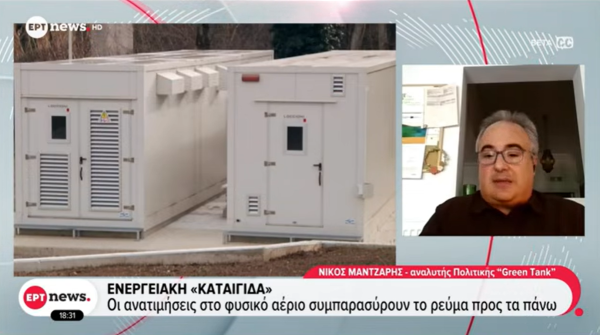
The Green Tank on ERT News: Targeted measures to bring down energy costs
Speaking during a news bulletin on ERT News on 19/10/2026, Nikos Mantzaris, co-founder and lead policy analyst at The Green Tank, discussed rising energy costs and the need for immediate, targeted measures that address the root causes of the problem.
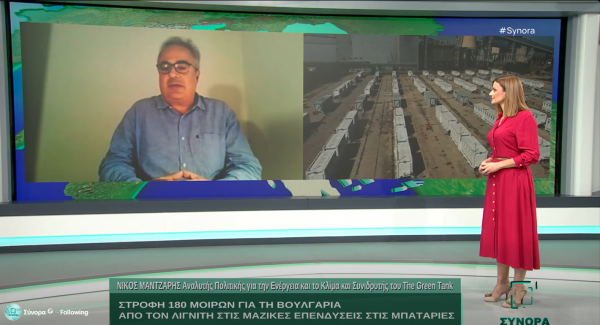
The Green Tank on ERT3’s Synora: Batteries and the challenge of making better use of renewable energy
On Synora, a programme hosted by Kalli Zarali on ERT3, Nikos Mantzaris, lead policy analyst and co-founder of The Green Tank, highlighted delays in the development of energy storage in Greece, comparing the country’s progress with that of Bulgaria.
The Green Tank on SKAI Radio: The role of renewables and energy storage in electricity prices
Nikos Mantzaris, co-founder and Lead Policy Analyst at The Green Tank, spoke on SKAI Radio’s programme Defterες Skepseis on Sunday, 11 October 2026, with hosts Petros Kirkilis and Isaak Triantafyllidis. The discussion focused on electricity prices, the contribution of renewable energy sources (RES) and the need to accelerate energy storage deployment.
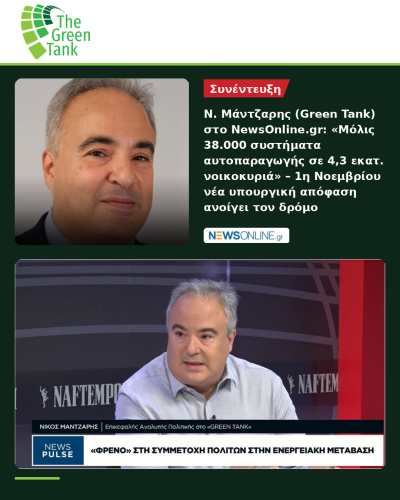
The Green Tank on Naftemporiki TV and NewsOnline: Self-generation can reduce energy costs, but urgent action is needed
The role of self-generation and Energy Communities in reducing energy costs, as well as the barriers that continue to hinder their development, was discussed by Nikos Mantzaris, Policy Analyst and co-founder of The Green Tank, in interviews with Naftemporiki TV and NewsOnline.
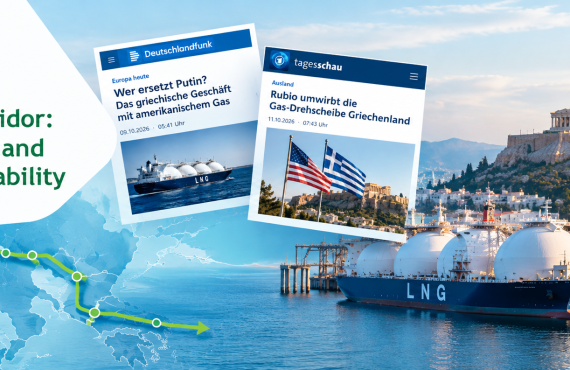
The Green Tank’s report on the Vertical Corridor featured in German media
Europe aims to end all Russian gas imports by November 2027. Greece aspires to play a central role in this effort, becoming a gateway for US liquefied natural gas (LNG) to Southeastern and Central Europe through the Vertical Corridor. But how much of this new infrastructure is actually needed, and what will it cost consumers? These questions were explored in two German media reports by Jasper Riemann featuring Nikos Mantzaris, Policy Analyst Lead and co-founder of The Green Tank.
The Green Tank on Status Radio: Energy planning in Vertical Corridor countries does not justify new LNG infrastructure in Greece
Against the backdrop of the debate over the Vertical Corridor and US Secretary of State Marco Rubio’s visit to Athens, Nikos Mantzaris, Head of Policy Analysis and co-founder of The Green Tank, spoke to Stavros Apostolidis on Status Radio 94.2 on the need for new LNG infrastructure in Greece and the outlook for fossil gas demand in the nine countries of the Vertical Corridor.
Nikos Mantzaris on News 24/7’s Pop Science
Why does electricity remain expensive despite the growing share of renewable energy? Nikos Mantzaris, Lead Policy Analyst and co-founder of The Green Tank, spoke with Niki Bakouli on Pop Science, News 24/7’s podcast about the factors shaping electricity prices and ways to reduce energy costs for consumers.
The Green Tank on Parapolitika FM: Cutting fossil gas use, accelerating batteries and expanding self-consumption to lower electricity prices
Nikos Mantzaris, Lead Policy Analyst and co-founder of The Green Tank, spoke to Alexandros Klossas on the “Proto Proino” morning show on Parapolitika FM 90.1 about the impact of geopolitical instability on energy markets, high electricity prices, and solutions that can help reduce costs for households and businesses.
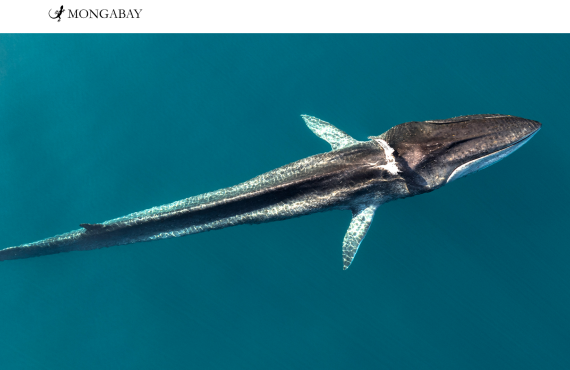
Can technology help protect Mediterranean whales from ship strikes?
Ship strikes are the leading human-induced threat to endangered sperm and fin whales in the Mediterranean. A special feature by Mongabay examines the scale of the threat, as well as the solutions being explored to address it. The feature highlights SAvE Whales, a project aimed at developing an innovative acoustic early-warning system for ships in the Strait of Kythira.
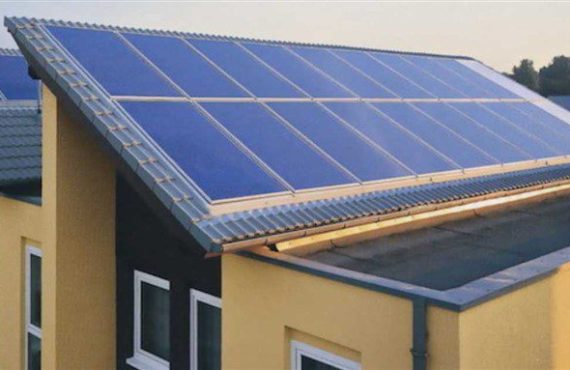
The Green Tank comments on Greece’s new self-consumption ministerial decision
An AMNA (Athens-Macedonian News Agency) article examines Greece’s new Ministerial Decision simplifying and accelerating procedures for small self-consumption energy systems, with or without battery storage.
The article features comments by Nikos Mantzaris, Lead Policy Analyst and co-founder of The Green Tank,.
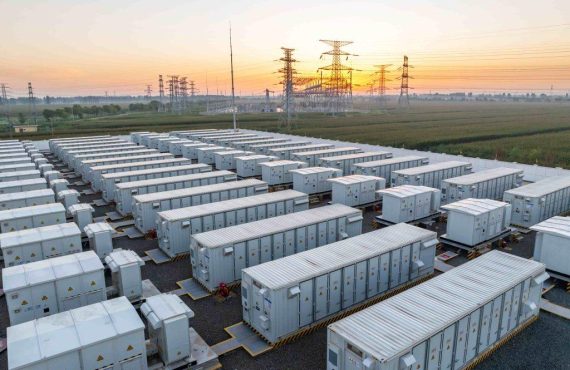
The Green Tank in To Vima on the role of batteries in reducing renewable energy curtailment and fossil gas use
Batteries are already helping to reduce the amount of renewable energy being lost in Greece, while also reducing the need for electricity generation from costly fossil gas. However, the country is still far from the desired level of battery deployment. This is highlighted by data from IPTO’s day-ahead scheduling analysed by The Green Tank and featured in an article by Mahi Tratsa in To Vima tis Kyriakis and ot.gr.

Natural Capital, Biodiversity and the Economy: Why Nature Is an Investment in Our Future
In an interview with ESG+ Stories, Ioli Christopoulou, Policy Director and co-founder of The Green Tank, discusses the need to rethink how we measure wealth and well-being. She explains why GDP alone is no longer enough to capture a country’s true prosperity, and why nature should be recognised as a form of capital and an asset that underpins our economy and society.

The Green Tank on SKAI Radio on electricity prices
Nikos Mantzaris, co-founder and energy policy analyst at The Green Tank, spoke to journalist Giorgos Psaltis on SKAI Radio about electricity prices, following the Prime Minister’s commitment, announced at the Thessaloniki International Fair (TIF), to reduce electricity bills by 30% over the next three years.


