


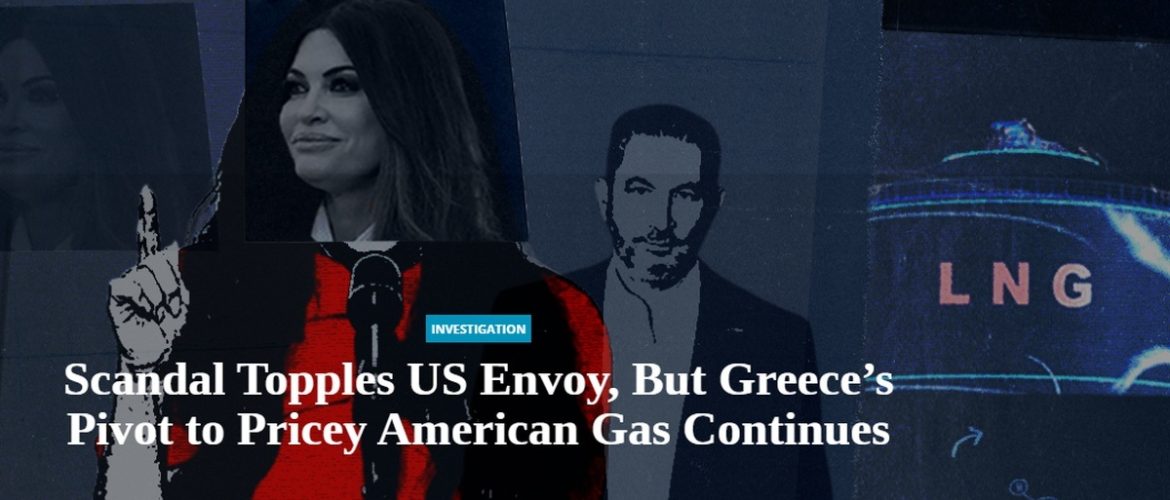
An investigation by Stavros Malichudis and Eleni Stamatoukou, published in Balkan Insight and Solomon, examines Greece’s shift towards US liquefied natural gas (LNG), highlighting business interests, costs, and questions surrounding the economic viability of the Vertical Gas Corridor and the new LNG infrastructure planned in the country.
The investigation explores the role of former US Ambassador to Greece Kimberly Guilfoyle in the Vertical Gas Corridor, presenting both the arguments put forward by its supporters and concerns about its necessity and potential cost to consumers.
It also draws on The Green Tank’s analysis of the Vertical Corridor, highlighting the Corridor’s lack of competitiveness. According to the analysis, alternative routes for transporting fossil gas to Ukraine and Hungary are up to 76% and 45% cheaper, respectively, than routes via Greece. Notably, DESFA’s representative interviewed by the journalists also acknowledged that cheaper routes are available than those originating in Greece. Meanwhile, Greece’s existing LNG infrastructure is sufficient to meet the needs of all Vertical Corridor countries, as outlined in their National Energy and Climate Plans (NECPs).
These findings raise legitimate questions about the need for further investment in LNG infrastructure and the potential burden on consumers, particularly at a time when fossil gas prices remain high and the economic viability of such projects is still uncertain.
Read the full investigation on Balkan Insight (in English) and Solomon (in Greek).


