


The Green Tank participates in the ARTEMIS partners meeting in Sardinia
Two important and inspiring days for the ARTEMIS Interreg Euro-MED Natural Heritage project took place on 3–4 March 2026 in Santa Teresa Gallura, Sardinia, where partners met at the project’s Sardinian pilot site, the Capo Testa – Punta Falcone Marine Protected Area.
Online Meetings Kick Off the Implementation of the Nature Restoration Regulation in Greece
Two online meetings on the implementation of EU Regulation 2024/1991 on Nature Restoration in Greece were held on 18 December 2025, organized by the Ministry of Environment and Energy (MoEE) and the Goulandris Natural History Museum / Hellenic Center for Wetlands (EMFHG-EKBY), in collaboration with The Green Tank.

Scientific publication on the governance of protected areas in Greece
A new scientific study examines the reasons why Greece’s system of protected areas continues to face serious challenges, despite repeated institutional reforms and improved administrative coordination in recent years.

Restoring Posidonia Meadows in Atzikiari Bay with ARTEMIS
A recent Inside Story article, “Fish Farming and Environmental Destruction: The EU Builds While the Greek State Destroys”, highlights how the ARTEMIS Interreg Euro-MED project—implemented with the participation of The Green Tank and the Hellenic Centre for Marine Research (HCMR)—is carrying out pilot actions to restore the Posidonia seagrass meadow in the Atzikiari Bay in Crete. In this bay, where a fish farming facility previously operated, analysis of data collected and processed by the Seagrass Ecology Lab of the Institute of Oceanography at HCMR shows that 66% of the Posidonia meadow has been destroyed.
Transforming Marine Science into Action: Side event at the 24th COP of the Barcelona Convention
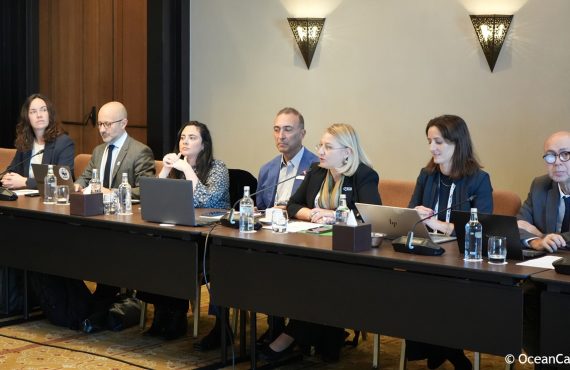
On the occasion of the 24th Meeting of the Contracting Parties to the Barcelona Convention (COP24), The Green Tank co-organized and moderated a side event titled “From Science to Action: Strengthening Conservation and Cooperation for Priority Mediterranean Species and Habitats” that was held on 4 December 2025 at the St. Regis in Cairo, Egypt. The event brought together leading scientific initiatives, regional institutions, and policy actors working to advance marine conservation across the Mediterranean.

The Green Tank at the Natural Heritage Mission 2025 Annual Institutional Dialogue in Barcelona
The Green Tank participated in the Interreg Euro-MED Natural Heritage Mission Annual Institutional Dialogue 2025 in Barcelona (25–27 November), held alongside the 10th Union for the Mediterranean (UfM) Regional Forum and the 30th anniversary of the Barcelona Process.

The Green Tank on Athina 9.84: Protecting Sperm Whales and the SAvE Whales Project
Speaking on the show “Radio City” on radio Athens 9.84, Ioli Christopoulou, Policy Director and co-founder of The Green Tank, highlighted the critical situation of sperm whales in Greek waters, focusing on the Kythira Strait and efforts being made to prevent ship strikes through the SAvE Whales project.
The SAvE Whales project successfully completes its 2nd year of implementation
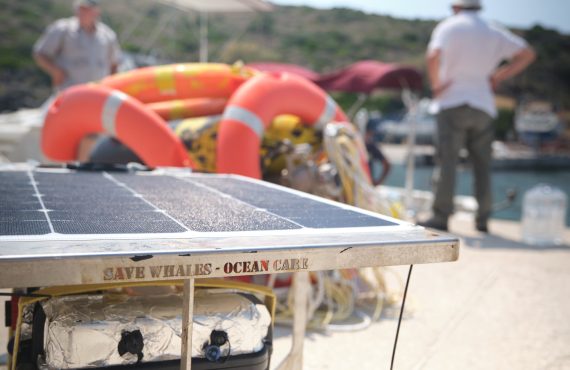
The SAvE Whales project (System for the Avoidance of ship-strikes with Endangered Whales) has successfully completed its second year of implementation, marking significant progress in developing and testing a complementary and innovative early warning system to prevent ship collisions with sperm whales in the Kythira Strait.
The Green Tank at the ARTEMIS Project Meeting in Italy
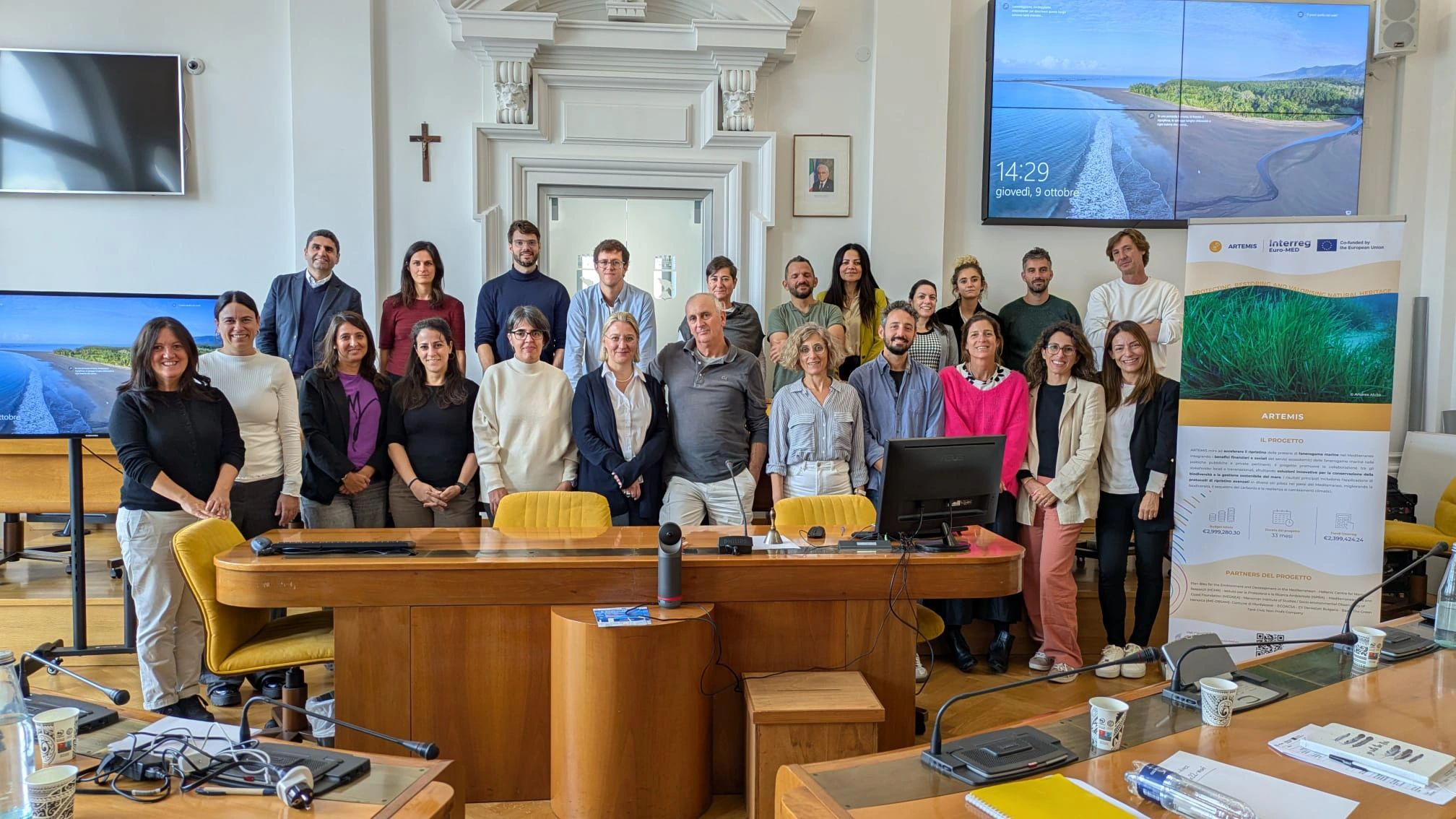
Between 7 and 10 October 2025, The Green Tank participated in the third in-person meeting of the ARTEMIS project in Monfalcone, Italy — an important opportunity for project partners to assess progress and coordinate next steps in this broad Mediterranean initiative to restore and conserve Posidonia oceanica seagrass meadows through innovative scientific, policy, and financial approaches.

EU Nature Credits consultation: The Green Tank and ARTEMIS share expertise
In July 2025, the European Commission presented the “Roadmap Towards Nature Credits”, an initiative that examines how nature protection and restoration can be enhanced through private finance, and in particular, through reliable, scientifically based and transparent nature credit schemes. The Green Tank, together with the partners of the Interreg Euro-MED ARTEMIS project, contributed to the public consultation.
The Green Tank submits comments on Public Consultations for new National Marine Parks
The Green Tank has submitted comments on the public consultations for the National Marine Parks of the Ionian Sea and the South Aegean – Southern Cyclades, expressing its support for their establishment and protection, as well as its satisfaction with the country’s fulfillment of commitments to marine biodiversity conservation and the creation of new marine protected areas.

Payments for Ecosystem Services: How Can We Invest in Nature Before It’s Too Late
In the article titled "Nature works for us for free. But for how much longer?", published in the newspaper Ta Nea, Dimitra Syrou, Nature Policy Associate at The Green Tank, explains that nature provides critical services for free – such as CO₂ absorption and flood protection – upon which our economy and society depend. Nevertheless, these Ecosystem Services are not valued and are thus assumed to be given and inexhaustible, resulting in their uninterrupted provision being undermined by human activities.

New National Marine Parks: How LIFE MareNatura Strengthens Marine Biodiversity Protection
In their article titled “New Marine Parks: How LIFE MareNatura Supports the ‘Even More’ to Come”, published in Kathimerini on July 27, 2025, Nadia Andreanidou (MEDASSET) and Ioli Christopoulou (The Green Tank) welcome Prime Minister Kyriakos Mitsotakis’ announcement of the creation of two new national marine parks in the Ionian and Aegean Seas.

Social Equity in Protected Areas – The Green Tank Contributes to a Global Study
The Green Tank contributed to a major study assessing the governance of Protected and Conserved Areas (PCAs) worldwide. The study was led by a team from the International Institute for Environment and Development (IIED), with input from the Fidelio program and under the scientific guidance of Dr. Nicoletta Jones (Warwick University / University of Cambridge).


