


Green Public Procurement: Key to Decarbonizing the Greek Cement Industry
The cement industry is one of the most carbon-intensive industrial sectors globally. Yet its decarbonization is accompanied by significant technical and economic challenges. With the window for achieving the EU’s binding 2030 climate targets rapidly narrowing and the gradual phase-out of free allowances under the EU Emissions Trading System (EU ETS) affecting the sector’s competitiveness, closing the investment gap for decarbonization projects has become an urgent priority.

Response to the Deputy Minister of Environment and Energy’s comments on our report on trends in the Greek retail electricity market
Following the Deputy Minister of Environment and Energy, Nikos Tsafos’ public comments, The Green Tank would like to present the data and methodology on which its conclusions are based. The response below clarifies the data used and explains why the increased reliance on fossil gas remains a critical issue both for emissions and for the cost of electricity paid by consumers.
Retail electricity market: Greece among the most expensive in the EU – €1.23 billion in additional costs from green tariffs
In 2025, Greece had the highest retail electricity prices in the EU-27 in terms of consumers’ purchasing power and the third highest in nominal prices. At the same time, the more expensive green tariffs continued to dominate the market despite their high cost, while increased fossil gas use kept both wholesale and retail electricity prices at elevated levels.
EU ETS 2025: Slowing progress and divergence from 2030 targets
Emissions from the four sectors covered by the EU Emissions Trading System (EU ETS) in the EU-27 remained largely unchanged in 2025 (-1.7%). At the same time, lignite and hard coal continued to account for 46% of emissions in the power and heat sector. In Greece, emissions from this sector increased due to higher fossil gas use, while the country recorded the highest maritime emissions in the EU. By contrast, the carbon footprint of the Greek cement industry fell by 9.2%, and that of refineries by 4.6%.
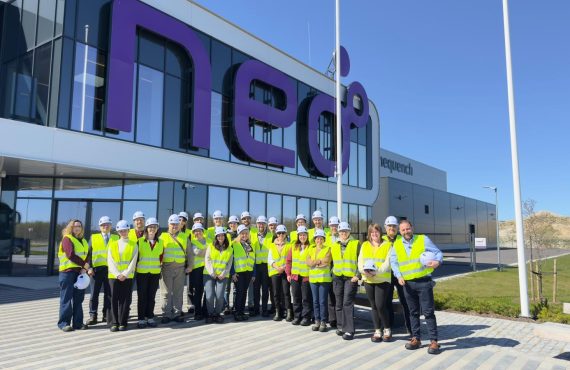
Just Transition & Local Community Participation: Lessons from Estonia
The Green Tank participated in the meeting of the working groups of the European Just Transition Platform, held in Narva, Estonia. During the meeting, participants presented and discussed the outcomes of the working groups, focusing on the future of the Just Transition in the next EU programming period (2028–2034).
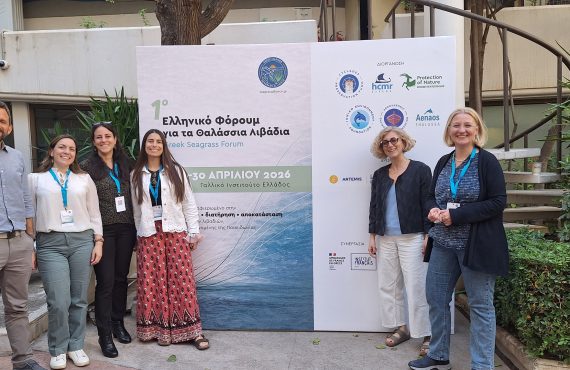
The Green Tank at the first Greek Seagrass Forum
The Green Tank actively participated in the first Greek Seagrass Forum, held at the French Institute of Greece in Athens from April 28 to 30, 2026, contributing to the dialogue on the protection and restoration of Posidonia oceanica, one of the Mediterranean’s most important ecosystems.

Greece: Increase in Greenhouse Gas Emissions in 2024 Signals Growing Gap from Climate Targets
The Hellenic Ministry of Environment and Energy has officially submitted Greece’s annual greenhouse gas (GHG) inventory for 2024 to the United Nations Framework Convention on Climate Change (UNFCCC). The data point to a concerning development in the country’s climate policy trajectory, as emissions are increasing rather than declining.
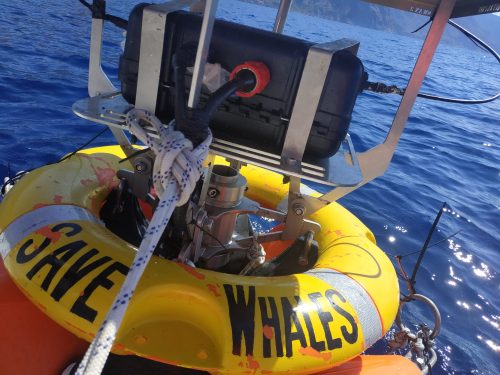
The Green Fund joins as new partner in the SAvE Whales project
A major step towards the implementation of the SAvE Whales initiative has been achieved with the inclusion of the Green Fund in the project's partnership. This development was formalized through the signing of an Addendum to the existing Memorandum of Understanding, strengthening the institutional basis and long-term sustainability of the effort to protect sperm whales in the Mediterranean.

Documenting Posidonia Restoration at Atzikiari Bay
The first episode of the ARTEMIS documentary series highlights pioneering restoration efforts in the Posidonia meadows at Atzikiari Bay, Crete, featuring the Hellenic Centre for Marine Research (HCMR), The Green Tank, and the project’s other partners.

The Green Tank Newsletter #1 | January–March 2026
We are delighted to launch our very first newsletter! Every quarter, we will share with you our most important updates, activities, and analyses on energy and climate policy, nature protection, and the transition to a truly sustainable future.

Renewables and Large Hydropower Drive Electricity Prices Down
In February 2026, increased electricity production from wind and hydropower displaced significant amounts of fossil fuels. Compared to February 2025, renewable energy sources (wind and solar) grew by 20% (+300 GWh), while large hydropower plants produced five times more (+874 GWh). The combined increase of 1,174 GWh of clean energy led to a nearly equivalent reduction in fossil fuel use: fossil gas fell by 35% (-838 GWh) and lignite by 47% (-205 GWh).

The Green Tank participates in the ARTEMIS partners meeting in Sardinia
Two important and inspiring days for the ARTEMIS Interreg Euro-MED Natural Heritage project took place on 3–4 March 2026 in Santa Teresa Gallura, Sardinia, where partners met at the project’s Sardinian pilot site, the Capo Testa – Punta Falcone Marine Protected Area.
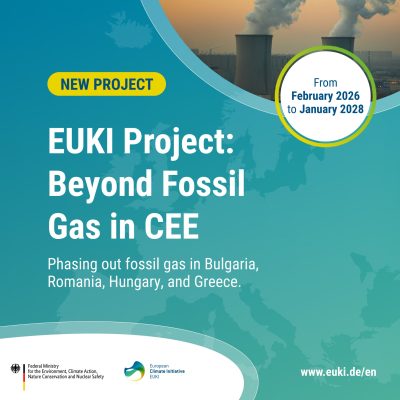
The Green Tank joins new project on fossil gas phase-out
The Green Tank is participating in the new EUKI-funded project “Beyond Fossil Gas in CEE”, a regional initiative aiming to accelerate the phase-out of fossil gas and support a secure and climate-neutral energy transition in Central and Eastern Europe.

Joint letter by environmental organisations to the Board of Directors of the European Investment Bank (EIB) on the ETS2 Frontloading Facility
Efforts to weaken the new Emissions Trading System for buildings and road transport (ETS2)—culminating in a one-year delay to its start—make parallel measures essential to ensure its fair and socially sustainable implementation. In this context, the European Commission—following interventions by civil society—has promoted the creation of an ETS2 Frontloading Facility through the European Investment Bank (EIB). This frontloading mechanism will allow Member States to gain early access to future revenues from the auctioning of emission allowances under ETS2 for buildings and road transport.


