


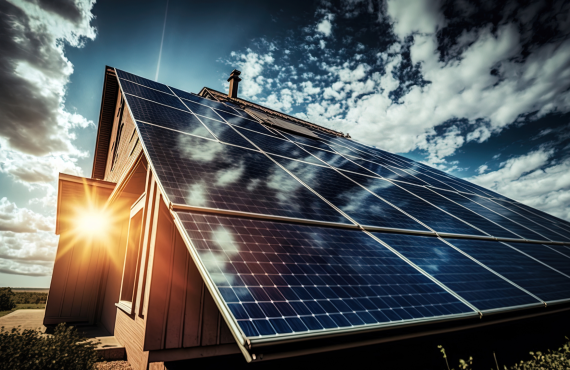
Reducing the carbon footprint with energy savings and economic benefits for households
An interview with Nikos Mantzaris to Machie Tratsa for Oikonomikos Tachydromos on the publication of the report “Strategies for reducing the carbon footprint and tackling energy poverty in Greek households”, drafted by The Green Tank and the consulting company Facets.
Trends in fossil gas consumption & imports – January 2024
In January 2024, fossil gas consumption was the highest since March 2022, exceeding 6 TWh for the first time in 21 consecutive months. Industrial gas use is on a constant rise, recording the second highest consumption (0.8 TWh) in six years for the month of January since January 2021. The other two uses, namely electricity and distribution networks, also saw an increase. For the 5th consecutive month, exports from the Sidirokastro gate were zero.
The EU-27 must stay on the path of climate neutrality
Ioli Christopoulou at the Euranet Plus podcast on the European Green Deal.

Energy milestones 2023: Greece has embraced the energy transition
In an interview for Eco News, SKAI TV, and Korina Georgiou, Ioanna Souka, Data analyst, presents the data for 2023 that show that the country has embraced the energy transition and is moving towards fossil fuels phase out. Based on the data processed by The Green Tank, in 2023 clean energy in electricity production reached…
The carbon footprint of electricity production – December 2023
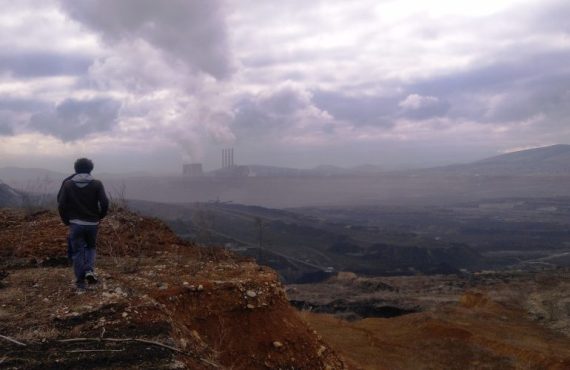
In 2023, 14.7 million tonnes of CO2 were emitted from Greece's electricity production sector, decreased by 4.28 million tonnes (-22.6%) compared to the same period in ‘22. Even greater reduction in emissions from PPC's thermal power plants (-24.7%).
Trends in electricity production – December 2023
In 2023, for the first time clean energy (renewables and large hydro) with 25,407 GWh covered more than half of the demand (51.4%) and 57% of electricity production. Fossil gas continued its “free fall” for the 2nd consecutive year. The share of lignite in the electricity production fell below 10% (9.1%) for the first time as the country operated without lignite for 28 days. Demand in 2023 was the lowest in the last ten years (49,479 GWh), down 2.4% compared to 2022.
More renewables, self-produced energy and reduced energy consumption among the energy milestones for 2023
Interview on the radio show Euranet, SKAI 100.3 FM with Korina Georgiou. The Green Tank's data analyst, Ioanna Souka, presents Greece's energy performance in 2023, and analyses the factors that will enhance Greece's shift to renewable energy sources. The discussion follows the news report by K. Voutsadakis for the Athens - Macedonian News Agency on the energy records of 2023, which draws on The Green Tank's analyses.
On new records for the energy market in 2023 by the Athens – Macedonian News Agency with data from Green Tank
Drawing on The Green Tank's analyses for electricity production, C02 emissions of the sector, fossil gas consumption and imports and the participation of citizens in energy communities and self-production projects, journalist Kostas Voutsadakis lists the energy records of 2023 for the Athens - Macedonian News Agency.
The future of energy: Green transition and energy communities
The Green Tank contributed to the podcast series "The Future of Energy" with journalist Romanos Gkotzos, produced by Cinergies Co-Op and supported by the Heinrich Böll Foundation in Greece.
Trends in fossil gas consumption & imports – December 2023
Fossil gas consumption in 2023 was 50.91 TWh, down 10.1% compared to 2022 and 27.2% compared to 2021, the year the energy crisis started. Industry sector increased its gas use by 84.7% compared to 2022, while the other two uses, namely electricity and distribution networks, recorded a decrease of 17.1% and 8.1% respectively. Total gas imports were 53.94 TWh, down 13% compared to 2022 and 23.3% compared to 2021.
Greece dropped to 10th place among the EU-27 Member States in terms of gas consumption decrease in the first 11 months of 2023 (-10.5%) compared to the same period in 2022,
The carbon footprint of electricity production– November 2023
In the first 11 months of 2023, 13.35 million tonnes of CO2 were emitted from Greece's power sector, decreased by 3.91 million tonnes (-22.6%) compared to the same period in 2022. Even greater reduction in emissions from PPC's thermal power plants (-24.9%).
Sectoral Carbon budgets: an opportunity for effective climate & social policy
Opinion article by Nikos Mantzaris in the special feature of energypress.gr on the experience of 2023, the challenges and expectations of 2024.
Trends in electricity production – November 2023
Renewables without large hydro (19,642 GWh) exceeded fossil gas and lignite combined (17,474 GWh) in the first eleven months of 2023, by 2.2 TWh, while together with large hydro (23,190 GWh) they covered more than half of demand in the eleven-month period (51.2%).

Will the Social Climate Fund suffice to shield citizens in the face of the new Emissions Trading System for the buildings and the road transportation sectors?
Contribution by Nikos Mantzaris to the round table discussion titled "Financing the Just Transition: From ETS2 to the Social Climate Fund" as part of the workshop "Economic challenges of the energy transition in Greece & Europe" organized by the ENA Institute of Alternative Policies.


