


Trends in fossil gas consumption & imports – May 2025
A historic high was recorded in gas consumption in the first five months of 2025 (29.06 TWh), mainly due to its use for electricity generation (65% of total gas consumption). In May 2025, domestic consumption reached 4.27 TWh, representing an 8.9% increase from April 2025. However, this marked the second consecutive month of decrease compared to May 2024. Despite the recent announcement of the EU’s plan for full decoupling from Russian fossil fuels, the trend of Russian gas imports in Greece is upwards.

A Guide to Co-Creating Renewable Energy Projects: How Companies and Local Communities Can Collaborate for a Just Transition
The CAN Europe report titled "Community Engagement and Fair Benefit Sharing of Renewable Energy Projects" introduces 14+1 Key Performance Indicators (KPIs) designed to assess and enhance local community involvement and equitable benefit distribution in renewable energy initiatives. Building upon this framework, Greek organisations Electra Energy and The Green Tank advocate for integrating these KPIs into national policies and corporate practices to strengthen public participation and acceptance of renewable energy projects in Greece.
The carbon footprint of electricity production – April 2025
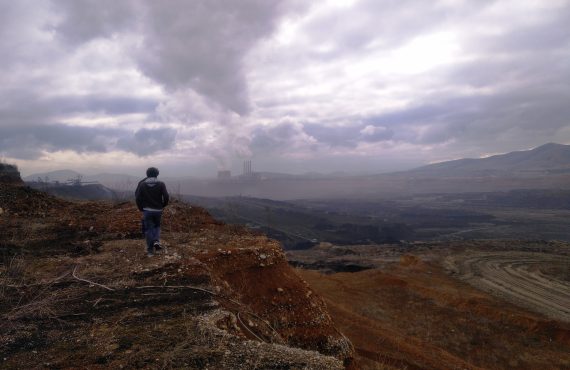
In April 2025, CO2 emissions from fossil fuel power plants were 0.88 million tons, the lowest in the last three years, thanks to the large decrease in gas this month. However, a total of 5.38 million tons were emitted in the first four months of 2025, of which gas is responsible for 52%. As a result, 53% of the sector’s annual carbon budget (10.2 million tons) has already been emitted, signaling that the sector is off track to meet the relevant target reflected in the NECP.

Trends in electricity production – April 2025
In April 2025, for the first time after six consecutive months, the net interconnection balance ended in net imports of 433 GWh. At the same time, electricity generation from gas fell in a 17-month low with 1,103 GWh. Thus, the average monthly price in the wholesale electricity market (89.1 €/MWh), was the lowest since May 2024. RES production reached 1,960 GWh, despite curtailments of 172 GWh, showing a decline compared to March (15.6%).

Greece’s Lignite Legacy: A Call for Renewable Energy Transition
In his Athens Voice article, Nikos Mantzaris from The Green Tank explains why Greece's reliance on lignite is a costly political and economic misstep. Delaying the transition to renewables has significant consequences.

Placing Energy Transition at the Core of Climate Action
At an event by XEN Glyfada, Ioli Christopoulou from The Green Tank highlighted the importance of the energy transition, Greece’s recent progress – such as the dramatic decline of lignite and the rise of renewables – and the challenges ahead.

How transparent is the Modernisation Fund?
The Green Tank has provided comments on the progress of the Modernisation Fund as part of the evaluation conducted by the European Commission's Directorate-General for Climate Action (DG Clima).

Αre Greece’s gas export plans realistic?
Ioanna Souka comments in an Energy Intelligence article

Trends in fossil gas consumption & imports – April 2025
April recorded the lowest domestic consumption in the last 17 months. For the first time in 2025, monthly gas use in electricity fell compared to last year, while grids recorded a large increase (+58%). In April, Russian gas rebounded, as it surpassed LNG imports for the first time in the last six months. Greece remains in the worst position in the ranking among EU Member States, with the largest increase (+28.4%) in gas consumption in the first quarter of 2025 compared to 2024.

Engagement of Local Communities in Renewable Energy Projects
The new CAN report titled “Community Engagement and Fair Benefit Sharing of Renewable Energy Projects”, in which The Green Tank contributed, presents a guide aimed at strengthening the engagement of local communities in renewable energy projects.

The carbon footprint of electricity production – March 2025
In March 2025, CO2 emissions from fossil fuel power plants were 1.01 million tons, down 41% from February. A total of 4.5 million tons were emitted from the power generation sector in the first quarter of 2025. Emissions from fossil gas plants for the first quarter were the highest of the decade at 2.36 million tons. Two lignite plants and three gas plants made up the top five polluters. The power sector has already met 44% of the available carbon budget for 2025 (10.2 million tons) based on the revised final NECP and is currently off track to achieve the
Trends in electricity production – March 2025
March 2025 saw a decline in demand (-5.8%). RES production in the same month reached 2,299 GWh, despite increased curtailments (104 GWh), and reduced wind generation. However, the huge increase in fossil gas in the first quarter of 2025 (+2,142 GWh), which was directed mainly at exports, has led to a completely opposite picture to the one observed in the same period of the previous two years, when clean energy surpassed fossil fuels.

What is the ETS 2 and why does it concern us?
On Tuesday April 29, the Green Tank organized the webinar “What is the ETS 2 and why does it concern us?”, in the context of the LIFE Effect project.
How “green” is the energy transition in Western Macedonia and the Western Balkans?
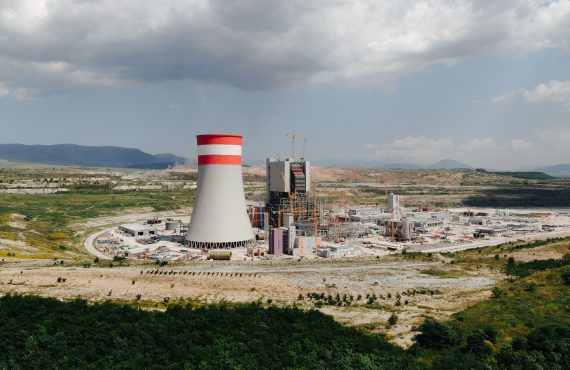
Nikos Mantzaris spoke to Kalli Zarali and the ERT3 show “Borders” about PPC’s plans in Western Macedonia and the new energy landscape that is taking shape in the Western Balkans.


