


Energy Poverty Is Not a Technical Issue – It’s a Social One
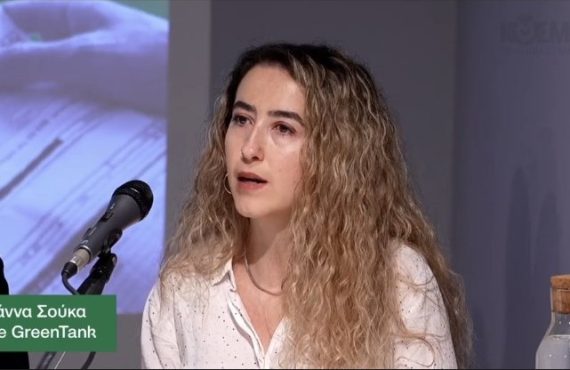
At the public discussion “Talking with the World (Kosmos),” organized by the political party Kosmos on January 22, 2026, to address energy poverty, Ioanna Souka, Energy Policy Analyst at The Green Tank, stressed that energy poverty in Greece is a particularly serious social problem. According to Eurostat and the EU Energy Poverty Advisory Hub, Greece records the highest values across four key energy poverty indicators reflecting socioeconomic impacts and living conditions.
State of Climate in Greece 2025: The Electricity Generation Sector
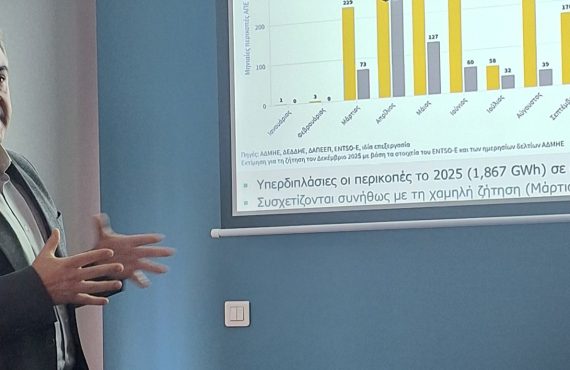
As part of the State of Climate in Greece for 2025, conducted by scientists from the Institute for Environmental Research and Sustainable Development at the National Observatory of Athens and organized by the Climatebook information hub, Nikos Mantzaris presented the results of the Green Tank analysis for the electricity generation sector.
The Green Tank comments on the EU public consultation on CO₂ markets and infrastructure
The European Commission launched a public consultation on a new legislative initiative for CO₂ markets and infrastructure, as part of the EU strategy for industrial decarbonisation. The Green Tank submitted its views, stressing that the development of CO₂ markets and infrastructure can play a meaningful role in the industrial transition only if it is strictly limited to processes that are genuinely hard to decarbonise.

Trends in fossil gas consumption & imports – December 2025
In 2025, domestic gas consumption reached a historic high of 70.2 TWh. 70.3% came from the power generation sector, which recorded a record 49.3 TWh, followed by networks with 13.1 TWh. Industry had the lowest consumption at 7.8 TWh (-13.5% compared to 2024). LNG had the largest share of imports (32.7 TWh), surpassing Russian gas (27.6 TWh). Exports in 2025 (8.6 TWh) tripled compared to those in 2024. More than 90% of exported gas was channeled through the same gate as Russian gas imports (Sidirokastro).

The carbon footprint of electricity production – November 2025
In November 2025, emissions from power plants reached 1.16 million tons, and the sector's carbon intensity was 250 g CO2/kWh, an improvement of 7.7% compared to October. However, in the first 11 months of 2025 total emissions reached 14.07 million tons, mainly due to high emissions from gas-fired power plants, which were the second highest since 2021 and accounted for 55.7% of total emissions for the period. Ag. Dimitrios was the top polluter with 2.3 million tons of CO2 for the 11-month period.

Climate crisis heating up, climate policy in retreat
In an article as part of a special edition with ELIAMEP’s forecasts for 2026, published in Ta Nea, titled “Climate crisis heating up, climate policy in retreat”, Nikos Mantzaris, Chief Policy Analyst and co-founder of The Green Tank, examines one of the defining contradictions of our time: while the climate crisis is intensifying at an accelerating pace, climate policy at both European and national level is retreating dangerously.

Trends in electricity production – November 2025
In the first 11 months of 2025, we had record production from RES (24,595 GWh) and natural gas (20,864 GWh), record net exports (2,409 GWh), but also record RES curtailments, which reached 1,863 GWh and were more than double those of the same period in 2024 (886 GWh). In November specifically, RES ranked first in electricity production with 2,072 GWh, followed by gas with 1,778 GWh, while net exports doubled compared to October, reaching 477 GWh. The monthly average wholesale electricity price was 106.5 €/MWh.
Towards zero-emission buildings by 2050? The Green Tank comments in the public consultation
The Green Tank submitted detailed comments and proposals on the “Long-term strategy for the renovation of the public and private building stock and its transformation into a carbon-free, highly energy-efficient building stock by 2050,” which was put out for public consultation in December 2025.

Increased reliance on fossil gas and delays in energy storage are keeping electricity prices high
Nikos Mantzaris, Policy Analyst and co-founder at The Green Tank, was featured on Naftemporiki TV’s Index programme, hosted by Christina Kousouni and Michalis Mastorakis, in an in-depth discussion on high electricity prices and Greece’s energy policy choices.
Trends in fossil gas consumption & imports – November 2025
November 2025 saw the highest exports in the last two years (1.34 TWh), with over 90% exported through Sidirokastro. LNG ranked first in imports for November with 3.26 TWh (78% from Agia Triada). It also ranked first for the 11-month period with 28.4 TWh. Domestic gas consumption was 5.5 TWh for November and 62.5 TWh for the first 11 months of 2025, the second highest domestic gas consumption on record after that of 2021 for the same period.
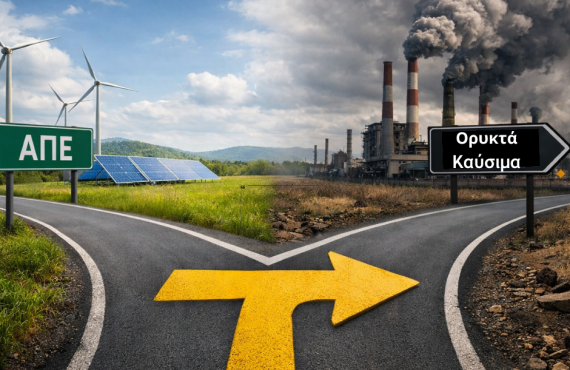
Greece Is Off Track from NECP Goals – The Risks of Europe’s “Dual Compass”
Until recently, Greece was on track to achieve its CO₂ emissions reduction target of 55% by 2030, thanks to lignite phase-out and the rapid expansion of renewable energy. However, Nikos Mantzaris, energy policy analyst and co-founder of The Green Tank, warns that power sector emissions in 2025 are expected to reach 15 million tons, compared to the 10.2 million tons projected in the National Energy and Climate Plan (NECP).
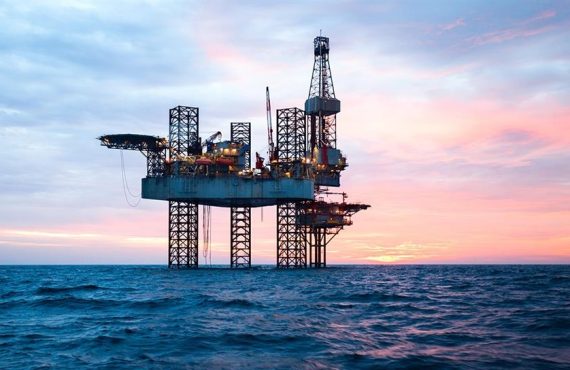
Offshore drilling in the Ionian Sea: a climate-disastrous choice with uncertain economic benefits
Recent government announcements on hydrocarbon exploration in the Ionian Sea have been presented as a pathway to Greece’s energy autonomy. However, as Nikos Mantzaris, energy policy analyst and co-founder of The Green Tank, points out on Inside Story, the available evidence shows that this choice runs counter to both the country’s climate commitments and the public interest.

Why does Greece’s electricity market remain so expensive?
Despite the increase in electricity generation from Renewable Energy Sources (RES), Greece consistently remains among the most expensive countries in Europe in the day-ahead electricity market (DAM). According to a new analysis by The Green Tank, which also compares Greece with Portugal, the main reasons are the country’s growing dependence on fossil gas and the lack of energy storage infrastructure.
The carbon footprint of electricity production – October 2025
In October 2025 carbon intensity in electricity production reached an eight-month peak (266 g CO2/kWh) due to high production from both gas and lignite compared to other months during this period. In the first 10 months of 2025, total emissions reached 12.9 million tons, exceeding the NECP target for the annual carbon budget by 2.7 million tons. Gas-fired units were responsible for 55.5% of the total, setting a 10-month emissions record of 7.16 million tons.


