


Revision of ETS2: an opportunity or a setback for the European Green Deal?
In a letter addressed to 19 Environment Ministers, Climate, Net Zero and Clean Growth Commissioner Wopke Hoekstra announced on 21 October 2025 the European Commission’s intention to amend the rules governing the Market Stability Reserve (MSR). The 19 Ministers had co-signed a joint non-paper in June on price uncertainties in the new Emissions Trading System for buildings and road transport (ETS2).
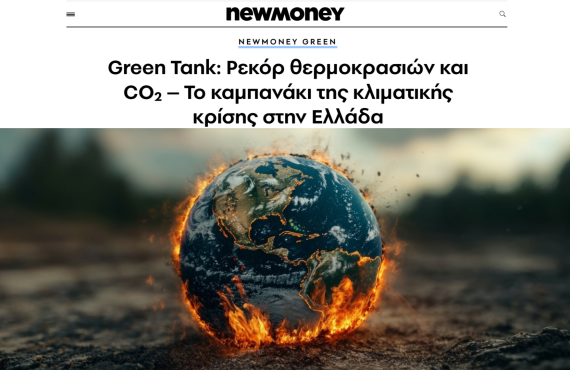
Record Temperatures and CO₂: A Wake-Up Call on the Climate Crisis in Greece
In her article for New Money, Maria-Christina Doulami, Communications Officer at The Green Tank, reviews the latest data on the climate crisis in Greece and worldwide, emphasizing the urgent need for action.
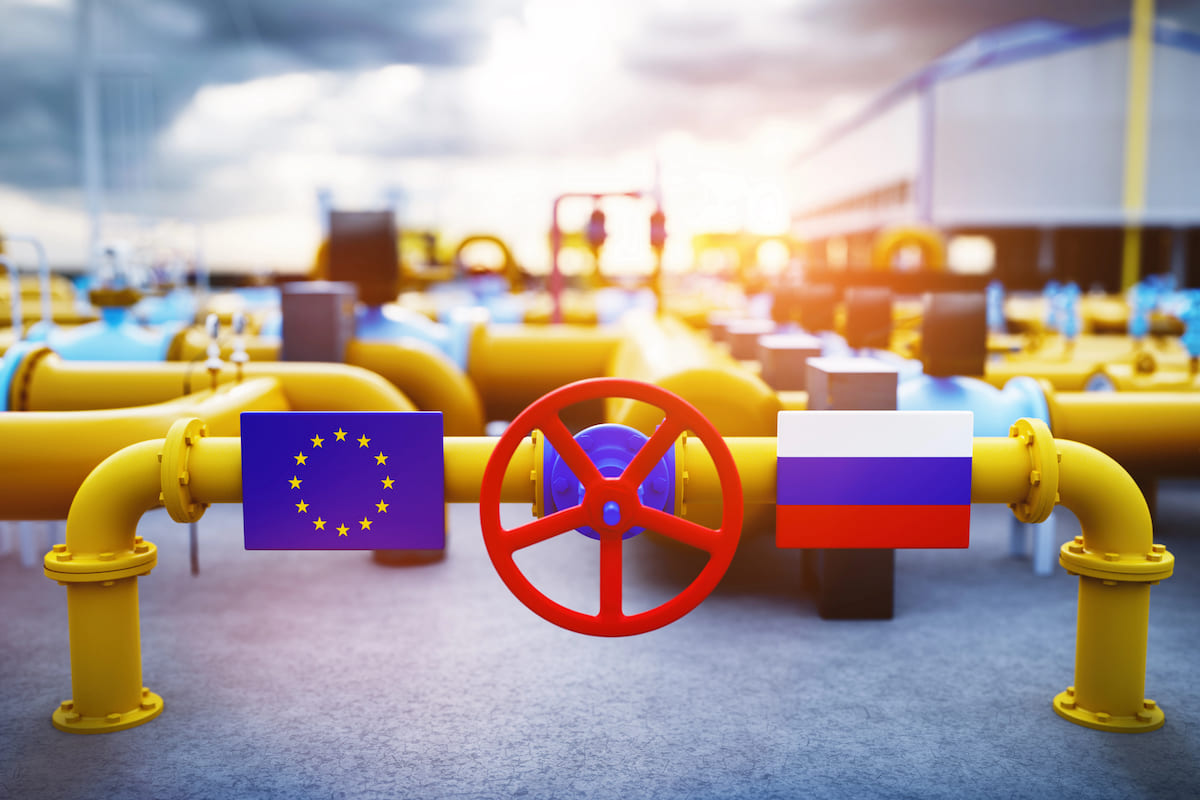
The Green Tank calls for a strong ban on Russian gas imports
The Green Tank has addressed a letter to the Ministry of Environment and Energy ahead of the Energy Council meeting on October 20, expressing concern over the course of negotiations within the EU Council on the proposed Regulation for the gradual phase-out of Russian gas imports.
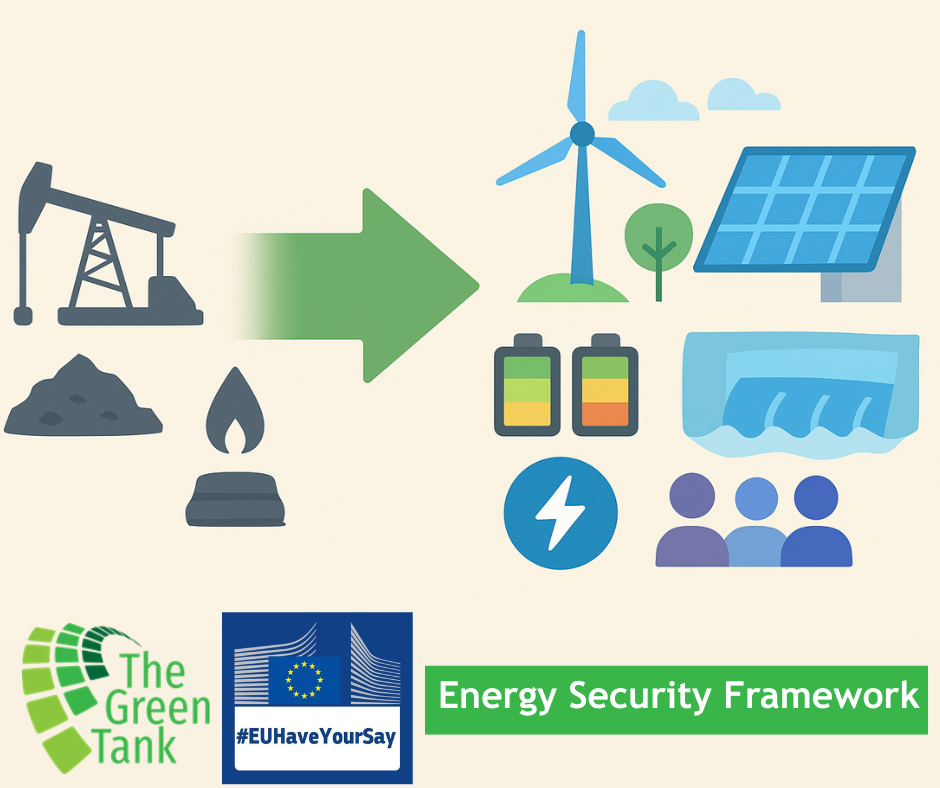
The Green Tank provides feedback on the EU Energy Security Framework
The Green Tank has submitted its feedback to the European Commission’s revision of the EU Energy Security Framework, emphasizing the urgent need to move away from fossil fuels and redefine energy security around renewable energy, electrification, energy efficiency, and citizen participation.
The Green Tank discusses Greece’s Social Climate Plan on Lifo Podcasts
In the latest episode of Lifo Podcasts titled “Social Climate Fund: Real support or a missed opportunity?”, Ioanna Souka, energy policy analyst at The Green Tank, talks with Dina Karatzou about the strengths and weaknesses of Greece’s Social Climate Plan. They discuss the social impacts of ETS2 and how Greece can make use of up to €15.5 billion to ensure a just and sustainable energy transition.

Trends in fossil gas consumption & imports – September 2025
The first 9 months of 2025 saw the second highest historical gas consumption (51.3 TWh) after 2021. Demand in the power generation sector reached a decade high (36.5 TWh, 71% of the total). LNG was the first source of imports (22.8 TWh, +81% compared to 2024), although in September, Russian gas imports (2.51 TWh) exceeded LNG (1.63 TWh).
Landmark decision by RAAEY on Energy Communities
A decision of utmost importance for the integrity of the institution of Energy Communities (ECs), Citizen Energy Communities (CECs) and Renewable Energy Communities (RECs) was announced last week by the Regulatory Authority for Waste, Energy and Water (RAAEY).

The energy transition cannot happen without citizens
In her article published on energypress, Ioanna Souka highlights that citizen participation is a prerequisite for a fair and sustainable energy transition.

The carbon footprint of electricity production – August 2025
In the first 8 months of 2025, carbon emissions from the power sector (10.56 million tons) exceeded the annual carbon budget of the NECP (10.2 million tons), as fossil gas plants set a record for the same period with 5.79 million tons. For August, however, emissions were relatively lower (1.32 million tons), and carbon intensity was low (213.9 g CO2/kWh) thanks to reduced lignite and gas use.

Market interventions and energy storage: the “keys” to lower electricity prices
Ahead of the announcement of October electricity tariffs, Nikos Mantzaris spoke on ERT with journalist Katerina Christofilidou about energy prices.

Trends in electricity production – August 2025
A record monthly electricity production from RES (2,992 GWh) occurred in August despite high curtailments (231 GWh). With lignite significantly reduced (74 GWh) and gas slightly reduced (2,024 GWh), the average wholesale market price was 73.16 €/MWh, a 16-month low. The first eight months of 2025 saw record highs for exports (1,420 GWh) and gas (15,413 GWh). However, net sources outperformed fossil fuels by 602 GWh, meeting 52.6% of demand.
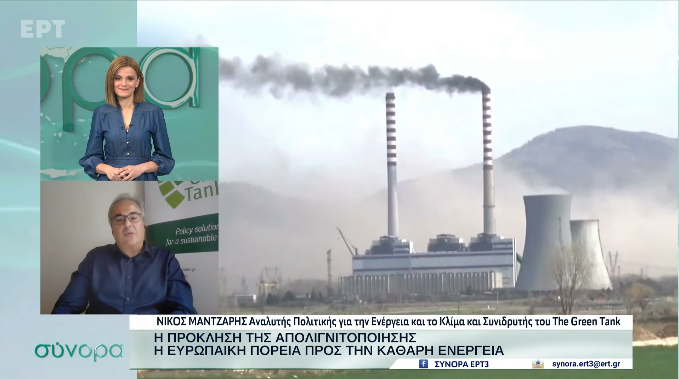
The Green Tank on the “Synora” Show: Coal Phase-Out and the Western Balkans
Nikos Mantzaris, political analyst and co-founder of The Green Tank, appeared on ERT3’s “Synora” show to discuss Greece’s progress in phasing out coal and the significant delays in the Western Balkans.
Can Businesses Reduce Electricity Costs Through Energy Communities?
At a time when the focus is on lowering energy costs for the country’s large industries, small and medium-sized enterprises (SMEs) must not be left behind. Energy communities offer a crucial tool to support them, enabling collective energy production and consumption, which lowers costs and strengthens financial sustainability. According to the article by Christina Zafeirouli on energygame.gr, with contributions from Ioanna Souka, there are already examples of energy communities in Greece, the most recent being the Prespes Renewable Energy Community (PREC).
A Just Energy Transition and the Role of Citizens: The Green Tank on Euranet
Ioanna Souka, Energy Policy Analyst at The Green Tank, spoke on the radio program Euranet and to journalists Nikos Andritsos and Korina Georgiou, about the just energy transition and the crucial role of citizens. As she stressed, “for the energy transition to succeed, citizen participation is essential.”


