


Increased reliance on fossil gas and delays in energy storage are keeping electricity prices high
Nikos Mantzaris, Policy Analyst and co-founder at The Green Tank, was featured on Naftemporiki TV’s Index programme, hosted by Christina Kousouni and Michalis Mastorakis, in an in-depth discussion on high electricity prices and Greece’s energy policy choices.

Stagnation in self-production and energy communities after the transition to net billing
1,747 energy communities, but only 18 new project applications in 6 months. Central Macedonia is the “champion” in electrified capacity, while in Western Macedonia for every 1 MW electrified, 3.6 MW are cancelled. The 1 GW “barrier” in self-generation was broken, however, from the ministerial decision on net billing (October 2024) to September 2025, only 16.5 MW of projects implementing the new mechanisms, were connected.

Trends in fossil gas consumption & imports – November 2025
November 2025 saw the highest exports in the last two years (1.34 TWh), with over 90% exported through Sidirokastro. LNG ranked first in imports for November with 3.26 TWh (78% from Agia Triada). It also ranked first for the 11-month period with 28.4 TWh. Domestic gas consumption was 5.5 TWh for November and 62.5 TWh for the first 11 months of 2025, the second highest domestic gas consumption on record after that of 2021 for the same period.
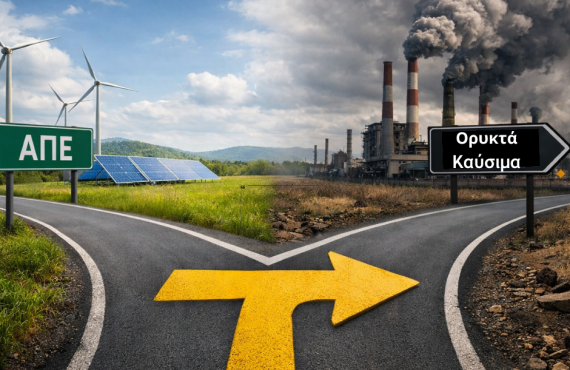
Greece Is Off Track from NECP Goals – The Risks of Europe’s “Dual Compass”
Until recently, Greece was on track to achieve its CO₂ emissions reduction target of 55% by 2030, thanks to lignite phase-out and the rapid expansion of renewable energy. However, Nikos Mantzaris, energy policy analyst and co-founder of The Green Tank, warns that power sector emissions in 2025 are expected to reach 15 million tons, compared to the 10.2 million tons projected in the National Energy and Climate Plan (NECP).
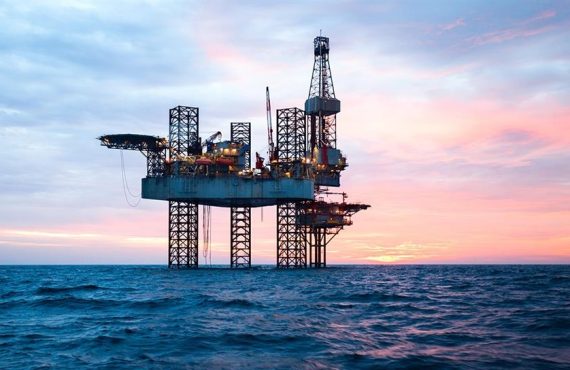
Offshore drilling in the Ionian Sea: a climate-disastrous choice with uncertain economic benefits
Recent government announcements on hydrocarbon exploration in the Ionian Sea have been presented as a pathway to Greece’s energy autonomy. However, as Nikos Mantzaris, energy policy analyst and co-founder of The Green Tank, points out on Inside Story, the available evidence shows that this choice runs counter to both the country’s climate commitments and the public interest.
Why does Greece’s electricity market remain so expensive?
Despite the increase in electricity generation from Renewable Energy Sources (RES), Greece consistently remains among the most expensive countries in Europe in the day-ahead electricity market (DAM). According to a new analysis by The Green Tank, which also compares Greece with Portugal, the main reasons are the country’s growing dependence on fossil gas and the lack of energy storage infrastructure.
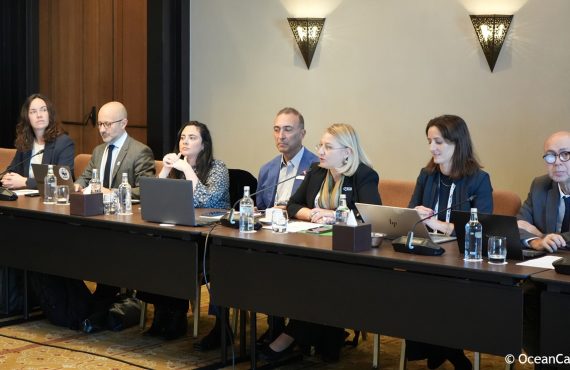
Transforming Marine Science into Action: Side event at the 24th COP of the Barcelona Convention
On the occasion of the 24th Meeting of the Contracting Parties to the Barcelona Convention (COP24), The Green Tank co-organized and moderated a side event titled “From Science to Action: Strengthening Conservation and Cooperation for Priority Mediterranean Species and Habitats” that was held on 4 December 2025 at the St. Regis in Cairo, Egypt. The event brought together leading scientific initiatives, regional institutions, and policy actors working to advance marine conservation across the Mediterranean.

The carbon footprint of electricity production – October 2025
In October 2025 carbon intensity in electricity production reached an eight-month peak (266 g CO2/kWh) due to high production from both gas and lignite compared to other months during this period. In the first 10 months of 2025, total emissions reached 12.9 million tons, exceeding the NECP target for the annual carbon budget by 2.7 million tons. Gas-fired units were responsible for 55.5% of the total, setting a 10-month emissions record of 7.16 million tons.

The Green Tank “Plugged In”: How Greece Can Win the Race for a Green Transition
In the latest episode of ADMIE’s podcast “Stin Priza (Plugged In), with journalist Mantalena Piou,” Nikos Mantzaris, policy analyst and co-founder of The Green Tank, explains why renewables are driving down electricity generation costs, yet consumers have not yet seen these savings reflected in their bills. As he notes, the parallel rise in gas-fired generation, the lack of sufficient storage infrastructure, and the absence of incentives to shift demand to low-price hours are undermining the economic benefits of renewables.

The Green Tank’s comments after the 4th Monitoring Committee of the Just Transition Development Program (PDAM) 2021-2027
The Green Tank participated in the 4th meeting of the Monitoring Committee, which took place at Zappeion on December 2, 2025. The main objective was the overall assessment of the course of the Program with emphasis on progress during the third year of its implementation. Despite the progress made in supporting entrepreneurship in lignite regions,…

Trends in electricity production – October 2025
Domestic electricity demand in October 2025 was at a five-month low of 4,268 GWh. However, the country continued to maintain high export levels (245 GWh). Renewable energy sources ranked first in electricity production with 1,896 GWh, while lignite reached a three-month high with 195 GWh. In the first 10 months of 2025, we had record electricity production from gas (19,079 GWh) and record exports (1,932 GWh). However, clean energy sources (RES and big hydro) dominated with a total production of 25,306 GWh, despite RES cuts estimated at 1,837 GWh for the 10-month period.
What Really Lowered Electricity Prices on November 26?
In an article for energypress, Nikos Mantzaris, policy analyst and co-founder of The Green Tank, examines ENTSO-E data and clarifies the factors behind the drop in electricity prices in Greece on November 26, 2025.

The Green Tank Comments on the National Action Plan to Combat Energy Poverty
The Green Tank participated in the public consultation launched by the Ministry of Environment and Energy on the updated National Action Plan to Combat Energy Poverty, submitting detailed comments and recommendations. The organisation recognises that the Plan moves in the right direction, combining short-term relief measures for households with longer-term interventions aimed at the structural alleviation of energy poverty. However, it highlights the need for improvements in several key areas.

The Green Tank at the Natural Heritage Mission 2025 Annual Institutional Dialogue in Barcelona
The Green Tank participated in the Interreg Euro-MED Natural Heritage Mission Annual Institutional Dialogue 2025 in Barcelona (25–27 November), held alongside the 10th Union for the Mediterranean (UfM) Regional Forum and the 30th anniversary of the Barcelona Process.


