


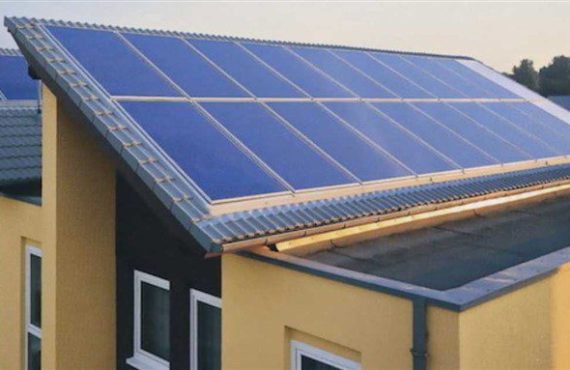
The Green Tank comments on Greece’s new self-consumption ministerial decision
An AMNA (Athens-Macedonian News Agency) article examines Greece’s new Ministerial Decision simplifying and accelerating procedures for small self-consumption energy systems, with or without battery storage.
The article features comments by Nikos Mantzaris, Lead Policy Analyst and co-founder of The Green Tank,.
The Green Tank comments on the new Just Transition Programme 2021–2027 measures
The Green Tank submitted comments to the Special Managing Authority for the Just Development Transition on two implementation documents included in the 11th written procedure of the Just Development Transition Programme (JTP) 2021–2027.
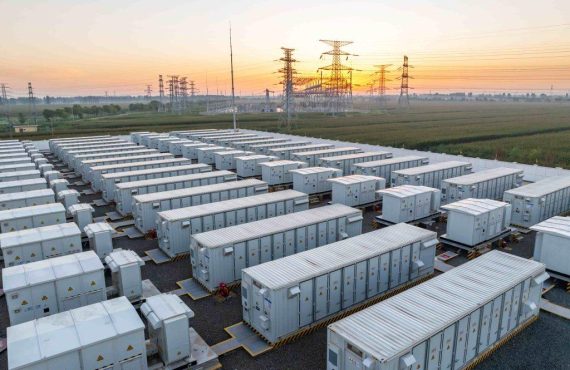
The Green Tank in To Vima on the role of batteries in reducing renewable energy curtailment and fossil gas use
Batteries are already helping to reduce the amount of renewable energy being lost in Greece, while also reducing the need for electricity generation from costly fossil gas. However, the country is still far from the desired level of battery deployment. This is highlighted by data from IPTO’s day-ahead scheduling analysed by The Green Tank and featured in an article by Mahi Tratsa in To Vima tis Kyriakis and ot.gr.

Natural Capital, Biodiversity and the Economy: Why Nature Is an Investment in Our Future
In an interview with ESG+ Stories, Ioli Christopoulou, Policy Director and co-founder of The Green Tank, discusses the need to rethink how we measure wealth and well-being. She explains why GDP alone is no longer enough to capture a country’s true prosperity, and why nature should be recognised as a form of capital and an asset that underpins our economy and society.

How much do electricity exports cost us?
The Green Tank’s new analysis , titled “Electricity exports from fossil gas: the cost to the Greek market and the climate”, quantitatively examines the impact of this additional use of fossil gas for electricity exports on Greece’s wholesale electricity market and on emissions from the power sector.

The Green Tank on SKAI Radio on electricity prices
Nikos Mantzaris, co-founder and energy policy analyst at The Green Tank, spoke to journalist Giorgos Psaltis on SKAI Radio about electricity prices, following the Prime Minister’s commitment, announced at the Thessaloniki International Fair (TIF), to reduce electricity bills by 30% over the next three years.

The Green Tank and ARTEMIS featured in To Vima on Nature Credits
Nature Credits and new approaches to financing nature protection and restoration were the focus of an article published in To Vima tis Kyriakis on 23 August 2026.

Trends in fossil gas consumption & imports – August 2026
In August, the highest Russian gas imports of 2026 via Sidirokastro (2.62 TWh) were recorded, while LNG imports via Amfitriti doubled (1.13 TWh). Domestic consumption remained flat at July’s levels (5.6 TWh). In the first 8 months, gas consumption by the grids sector reached a record high (9.3 TWh), gas use in electricity was the 2nd highest on record (31.6 TWh), while industry was limited to 4.7 TWh (-3.4% compared to 2025). LNG ranked 1st in imports for the first 8 months (27.9 TWh), reaching a historic high for this period of the year. Exports for the first 8 months

The Carbon Footprint of Electricity Production – July 2026
Emissions from electricity generation rose in July to 1.28 million tons (+25.6% compared to June), mainly due to increased gas use, which also pushed the carbon intensity above 200 g CO2/kWh (204 g CO2/kWh, +12.5%). However, for the first 7 months of 2026, emissions from the sector reached a historic low (8.23 million tons), mainly due to reduced use of lignite and oil in non-interconnected islands. Despite this historic low, the country has already emitted more than 90% of its annual carbon budget and is off track to meet the NECP the electricity production sector.

Trends in electricity production – July 2026
In July 2026, renewables broke the 3 TWh “barrier,” setting a record for monthly production at 3,097 GWh. By absorbing 22.8 GWh of renewable energy that would otherwise have been curtailed, batteries prevented 13.6% of curtailments, which totaled 144.9 GWh in July (or 4.5% of total renewable energy production). Cumulatively over the first 7 months of the year, clean energy sources (RES and large hydro) reached a record high (22,348 GWh), exceeding fossil fuels by 6.6 TWh. There was a significant decline in oil (-38.8%) thanks to the Crete interconnection. However, gas remained at high levels (12,876 GWh, just 3.8%
The real battle for a Just Transition begins now
The debate on the future of Greece’s lignite regions is no longer only about the timeline for the operation of lignite power plants. It is primarily about whether these regions will continue to receive support from the EU Cohesion Policy beyond 2027. In an article published in Oikonomikos Tachydromos titled “Just Transition: The real battle begins now”, Nikos Mantzaris highlights the importance of the decisions currently being taken at both European and national level for the new programming period 2028–2034.
Trends in fossil gas consumption & imports – July 2026
Domestic gas consumption rose in July (5.6 TWh, +11.6) due to increased use in electricity generation. Cumulatively, consumption for the first 7 months of the year reached 40 TWh. LNG ranked first in imports (24.9 TWh), reaching a historic high. Gas exports (10.2 TWh) hit a 3-year high, with 83% going via Sidirokastro. Compared to the other EU-27 member states during the first half of 2026, Greece ranked 6th, reducing its gas consumption by 0.9% compared to 2025, while the EU-27 average was +1.12%.

The Green Tank participates in EU public consultation on nature laws
The Green Tank participated in the European Commission’s public consultation on the future of the EU Birds and Habitats Directives (Nature Directives), which closed on 10 August 2026.
The carbon footprint of electricity production – June 2026
Record low emissions for Greece’s electricity sector in the first half of 2026 (6.95 million tons), due to the interconnection of Crete. The sector’s carbon intensity was also at record low levels both in June 2026 (183.1 g CO2/kWh), and in the first half of 2026 (217.8 CO2/kWh) due to record production from renewables and large hydro, as well as reduced oil use in Crete. Despite the progress, Greece is off track to achieve its NECP commitments due to the maintenance of high fossil gas use.


