


Trends in electricity production – April 2026
For the 4th consecutive month, renewables led the way in electricity production with 2,107 GWh, despite the high level of curtailments recorded in April (475 GWh). The first 7 batteries connected to the grid reduced RES curtailments by just 0.72% and gas-fired power generation by just 0.26%. High RES, combined with low levels of fossil gas and lignite (1,340 GWh and 197 GWh, respectively), led to a drop in the average wholesale price (89 €/MWh, -6.6%). However, over the 4-month period, fossil gas (7,329 GWh) was just 1.2% below last year’s record levels, while net exports reached a high of
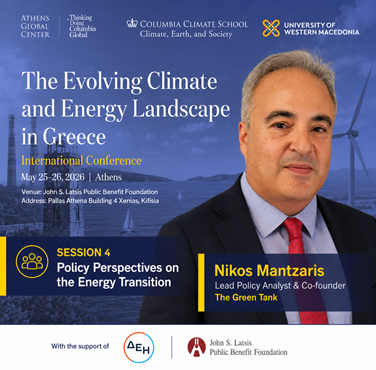
From Energy Crisis to Clean Energy Transition: The Green Tank on Greece’s Energy Future at International Athens Conference
At the international conference “The Evolving Climate and Energy Landscape in Greece”, organized by the Columbia Climate School, the University of Western Macedonia and the Columbia Global Center Athens, with the support of PPC and the John S. Latsis Public Benefit Foundation, on May 25–26, 2026 in Athens, Nikos Mantzaris, Lead Policy Analyst and co-founder of The Green Tank, participated in the session “Policy Perspectives on the Energy Transition” alongside representatives from academia, research institutions, and the energy sector.
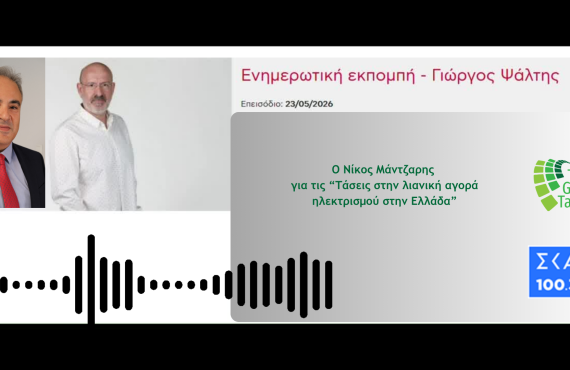
The Green Tank on SKAI FM: Why Electricity Prices Remain So High in Greece
Nikos Mantzaris, Lead Policy Analyst and co-founder of The Green Tank, spoke on Giorgos Psalti’s news radio show on SKAI 100.3 about the findings of The Green Tank’s latest analysis on trends in Greece’s retail electricity market.
Response to the Deputy Minister of Environment and Energy’s comments on our report on trends in the Greek retail electricity market
Following the Deputy Minister of Environment and Energy, Nikos Tsafos’ public comments, The Green Tank would like to present the data and methodology on which its conclusions are based. The response below clarifies the data used and explains why the increased reliance on fossil gas remains a critical issue both for emissions and for the cost of electricity paid by consumers.
Retail electricity market: Greece among the most expensive in the EU – €1.23 billion in additional costs from green tariffs
In 2025, Greece had the highest retail electricity prices in the EU-27 in terms of consumers’ purchasing power and the third highest in nominal prices. At the same time, the more expensive green tariffs continued to dominate the market despite their high cost, while increased fossil gas use kept both wholesale and retail electricity prices at elevated levels.
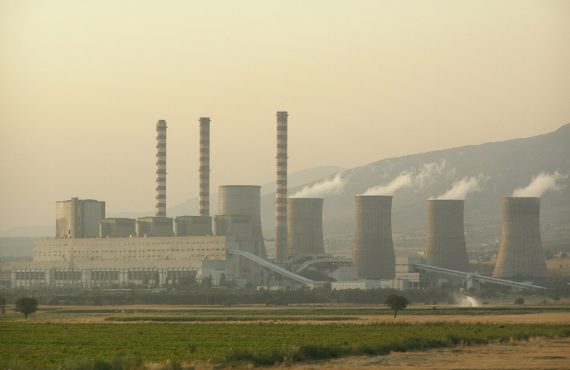
Agios Dimitrios Power Plant Closure: Lignite Phase-Out Leaves Critical Energy Transition Questions Unanswered
In an article on energypress.gr titled “Lignite is leaving, but the questions remain,” Nikos Mantzaris reflects on the permanent shutdown of the Agios Dimitrios Power Plant, the largest lignite-fired plant in Greece and one of the largest in the Balkans, after 42 years of operation.
EU ETS 2025: Slowing progress and divergence from 2030 targets
Emissions from the four sectors covered by the EU Emissions Trading System (EU ETS) in the EU-27 remained largely unchanged in 2025 (-1.7%). At the same time, lignite and hard coal continued to account for 46% of emissions in the power and heat sector. In Greece, emissions from this sector increased due to higher fossil gas use, while the country recorded the highest maritime emissions in the EU. By contrast, the carbon footprint of the Greek cement industry fell by 9.2%, and that of refineries by 4.6%.
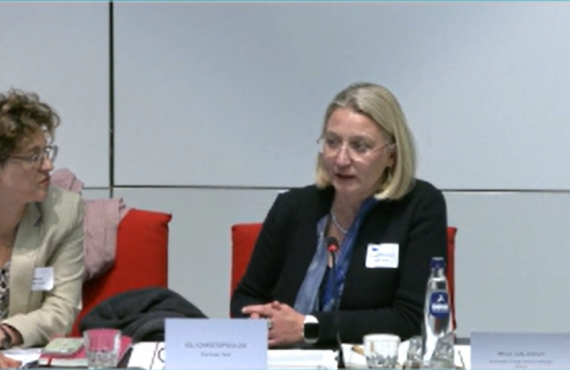
The Green Tank joins discussion on the future of Just Transition in Brussels
The Green Tank participated in an event titled “Advancing Just Transition: Addressing Social and Economic Impacts and Building Social Support,” organized in Brussels as part of the AdJUST Horizon Europe project, providing an opportunity to exchange views on the present and future of Just Transition.
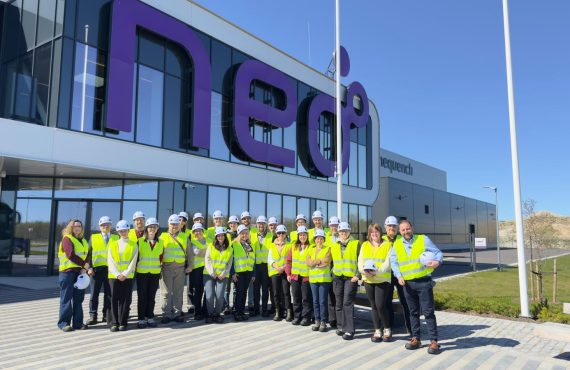
Just Transition & Local Community Participation: Lessons from Estonia
The Green Tank participated in the meeting of the working groups of the European Just Transition Platform, held in Narva, Estonia. During the meeting, participants presented and discussed the outcomes of the working groups, focusing on the future of the Just Transition in the next EU programming period (2028–2034).

Trends in fossil gas consumption & imports – April 2026
Domestic gas consumption in April (4.4 TWh) hit a 7-month low due to declines in all three sectors. Cumulatively for the first four months of 2026, total consumption remained at the same level as in 2025 (24.8 TWh), while consumption in networks reached a 4-year high (6.7 TWh). The primary source of imports for the 4-month period was LNG via Revythousa (17 TWh), despite a decline in April and the shutdown for maintenance of the Alexandroupolis FSRU. Exports saw a sharp decline in April (0.6 TWh). Compared to the other EU-27 member states for the first quarter of 2026, Greece
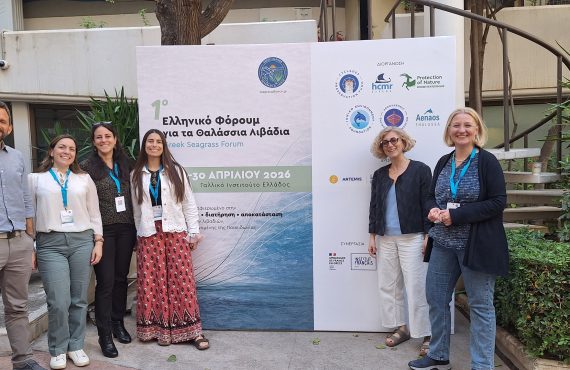
The Green Tank at the first Greek Seagrass Forum
The Green Tank actively participated in the first Greek Seagrass Forum, held at the French Institute of Greece in Athens from April 28 to 30, 2026, contributing to the dialogue on the protection and restoration of Posidonia oceanica, one of the Mediterranean’s most important ecosystems.

The carbon footprint of electricity production – March 2026
Emissions from electricity production rose in March 2026 to 1.28 million tons (+17% compared to February), with the carbon intensity standing at 222 g CO2/kWh (+10.6%) due to increased use of all three fossil fuels. For the first quarter of 2026, cumulative emissions were 3.96 million tons, down compared to 2025 (-24.7%) but higher than those of 2023 and 2024. There was a significant drop in emissions from oil (-44.7%) due to reduced production at thermal power plants in Crete.

Green Procurement for Green Cement and Decarbonisation of Industry
In an article published on energygame.gr, Stavros Gennitsaris, Industrial Policy Associate at The Green Tank, highlights the potential of Green Public Procurement (GPP) as a lever for decarbonizing the cement industry.
Trends in electricity production – March 2026
In the first quarter of 2026, net exports (3.4 TWh) exceeded total exports for 2025 (3 TWh), thanks to high generation from renewables (5.9 TWh) and large hydro (2.5 TWh). However, gas and lignite saw an increase in March compared to February (+19.9% and +12.9%, respectively), resulting in higher average price on the wholesale market (€95/MWh, +21.3%). RES curtailments for the quarter totaled 410 GWh, double last year’s figure, while hours with zero or negative prices reached 240 (11% of the total hours for the quarter).


