


Trends in electricity production – December 2025
In 2025, renewables (mainly wind & solar) set a production record, covering 46.7% of electricity demand, despite high curtailments (1,867 GWh), while lignite recorded a historic low (2,723 GWh). At the same time, production from fossil gas reached a historic high (23.3 TWh), which was partly channeled into electricity exports, which also reached a historic high (3 TWh). On the other hand, domestic demand was down compared to 2024, reaching 56.5 TWh.
High dependence on expensive fossil gas and the partial utilization of cheap RES resulted in the average price on the wholesale electricity market in 2025 reaching 104.1 €/MWh, an
The Green Tank’s Contribution to the European Commission on Greece’s EU Semester Report
The Green Tank, together with other environmental NGOs, was invited by the European Commission to provide input for the upcoming EU Semester report and recommendations for Greece. Our submission highlighted key gaps in the country’s energy policy and proposed concrete actions to ensure a fair, sustainable, and citizen-focused energy transition.
Online Meetings Kick Off the Implementation of the Nature Restoration Regulation in Greece
Two online meetings on the implementation of EU Regulation 2024/1991 on Nature Restoration in Greece were held on 18 December 2025, organized by the Ministry of Environment and Energy (MoEE) and the Goulandris Natural History Museum / Hellenic Center for Wetlands (EMFHG-EKBY), in collaboration with The Green Tank.
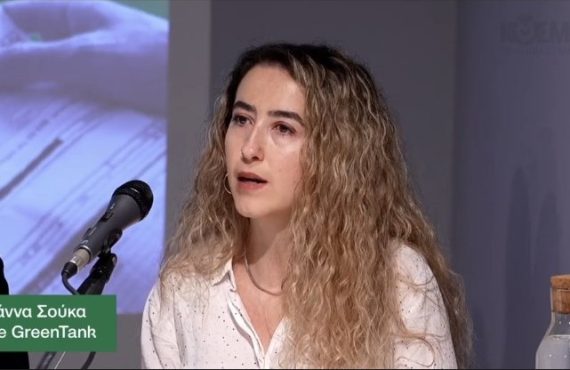
Energy Poverty Is Not a Technical Issue – It’s a Social One
At the public discussion “Talking with the World (Kosmos),” organized by the political party Kosmos on January 22, 2026, to address energy poverty, Ioanna Souka, Energy Policy Analyst at The Green Tank, stressed that energy poverty in Greece is a particularly serious social problem. According to Eurostat and the EU Energy Poverty Advisory Hub, Greece records the highest values across four key energy poverty indicators reflecting socioeconomic impacts and living conditions.
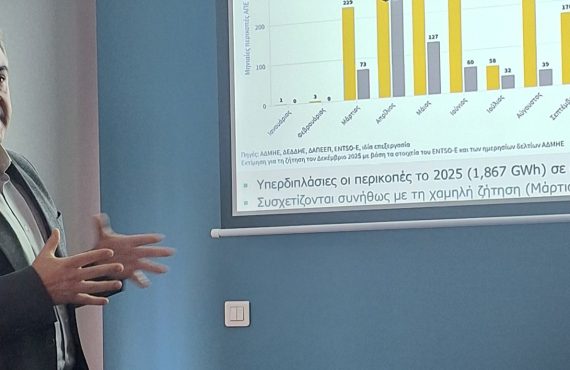
State of Climate in Greece 2025: The Electricity Generation Sector
As part of the State of Climate in Greece for 2025, conducted by scientists from the Institute for Environmental Research and Sustainable Development at the National Observatory of Athens and organized by the Climatebook information hub, Nikos Mantzaris presented the results of the Green Tank analysis for the electricity generation sector.
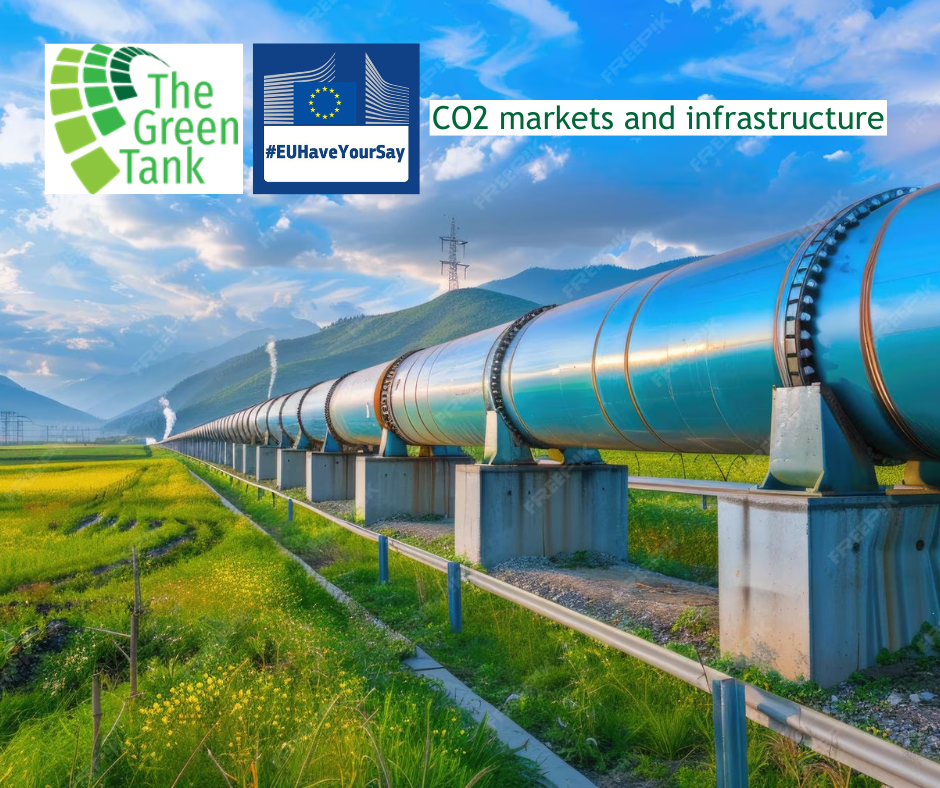
The Green Tank comments on the EU public consultation on CO₂ markets and infrastructure
The European Commission launched a public consultation on a new legislative initiative for CO₂ markets and infrastructure, as part of the EU strategy for industrial decarbonisation. The Green Tank submitted its views, stressing that the development of CO₂ markets and infrastructure can play a meaningful role in the industrial transition only if it is strictly limited to processes that are genuinely hard to decarbonise.

Scientific publication on the governance of protected areas in Greece
A new scientific study examines the reasons why Greece’s system of protected areas continues to face serious challenges, despite repeated institutional reforms and improved administrative coordination in recent years.

Trends in fossil gas consumption & imports – December 2025
In 2025, domestic gas consumption reached a historic high of 70.2 TWh. 70.3% came from the power generation sector, which recorded a record 49.3 TWh, followed by networks with 13.1 TWh. Industry had the lowest consumption at 7.8 TWh (-13.5% compared to 2024). LNG had the largest share of imports (32.7 TWh), surpassing Russian gas (27.6 TWh). Exports in 2025 (8.6 TWh) tripled compared to those in 2024. More than 90% of exported gas was channeled through the same gate as Russian gas imports (Sidirokastro).

The carbon footprint of electricity production – November 2025
In November 2025, emissions from power plants reached 1.16 million tons, and the sector's carbon intensity was 250 g CO2/kWh, an improvement of 7.7% compared to October. However, in the first 11 months of 2025 total emissions reached 14.07 million tons, mainly due to high emissions from gas-fired power plants, which were the second highest since 2021 and accounted for 55.7% of total emissions for the period. Ag. Dimitrios was the top polluter with 2.3 million tons of CO2 for the 11-month period.
Climate crisis heating up, climate policy in retreat
In an article as part of a special edition with ELIAMEP’s forecasts for 2026, published in Ta Nea, titled “Climate crisis heating up, climate policy in retreat”, Nikos Mantzaris, Chief Policy Analyst and co-founder of The Green Tank, examines one of the defining contradictions of our time: while the climate crisis is intensifying at an accelerating pace, climate policy at both European and national level is retreating dangerously.
Trends in electricity production – November 2025
In the first 11 months of 2025, we had record production from RES (24,595 GWh) and natural gas (20,864 GWh), record net exports (2,409 GWh), but also record RES curtailments, which reached 1,863 GWh and were more than double those of the same period in 2024 (886 GWh). In November specifically, RES ranked first in electricity production with 2,072 GWh, followed by gas with 1,778 GWh, while net exports doubled compared to October, reaching 477 GWh. The monthly average wholesale electricity price was 106.5 €/MWh.
Towards zero-emission buildings by 2050? The Green Tank comments in the public consultation
The Green Tank submitted detailed comments and proposals on the “Long-term strategy for the renovation of the public and private building stock and its transformation into a carbon-free, highly energy-efficient building stock by 2050,” which was put out for public consultation in December 2025.

Just Transition Newsletter #10
The tenth issue of The Green Tank’s newsletter has been published, covering developments over the past six months related to the Just Transition of lignite regions in Greece and across Europe (July–December 2025).

Restoring Posidonia Meadows in Atzikiari Bay with ARTEMIS
A recent Inside Story article, “Fish Farming and Environmental Destruction: The EU Builds While the Greek State Destroys”, highlights how the ARTEMIS Interreg Euro-MED project—implemented with the participation of The Green Tank and the Hellenic Centre for Marine Research (HCMR)—is carrying out pilot actions to restore the Posidonia seagrass meadow in the Atzikiari Bay in Crete. In this bay, where a fish farming facility previously operated, analysis of data collected and processed by the Seagrass Ecology Lab of the Institute of Oceanography at HCMR shows that 66% of the Posidonia meadow has been destroyed.


