


“The environmental crisis is still reversible, but time is running out”: Nikos Mantzaris’ interview on Fortune Greece
As part of Fortune Greece’s Earth Day 2026 special, Nikos Mantzaris, senior policy analyst & co-founder of The Green Tank, highlights that the environmental crisis is still reversible—but the window for action is rapidly closing.

Greece: Increase in Greenhouse Gas Emissions in 2024 Signals Growing Gap from Climate Targets
The Hellenic Ministry of Environment and Energy has officially submitted Greece’s annual greenhouse gas (GHG) inventory for 2024 to the United Nations Framework Convention on Climate Change (UNFCCC). The data point to a concerning development in the country’s climate policy trajectory, as emissions are increasing rather than declining.

The Green Tank comments on the Ministry of Environment and Energy’s draft law on permitted uses and activities in protected areas
The Green Tank submitted comments on the amendments proposed by the Ministry of Environment and Energy regarding permitted uses and activities within protected areas (Article 98), as part of the public consultation on the draft law titled: “Modernization of legislation for the use and production of energy from renewable sources – Provisions on environmental and forest protection – Arrangements for the organization and adequate staffing of the Ministry of Environment and Energy and its supervised bodies.”

Trends in fossil gas consumption & imports – March 2026
Gas consumption increased across all three sectors in March, reaching 6.6 TWh. Overall, for the first quarter of 2026, gas consumption in networks recorded a four-year high, while industrial gas consumption reached a five-year high. LNG ranked first in imports (4.7 TWh), but there was also a significant increase in imports via Sidirokastro (1.49 TWh, up 338% compared to February). Exports in March reached a three-year high (2.6 TWh), while for the first quarter of 2026, exports totaled 5.99 TWh, with Sidirokastro serving as the main export gateway (78%).
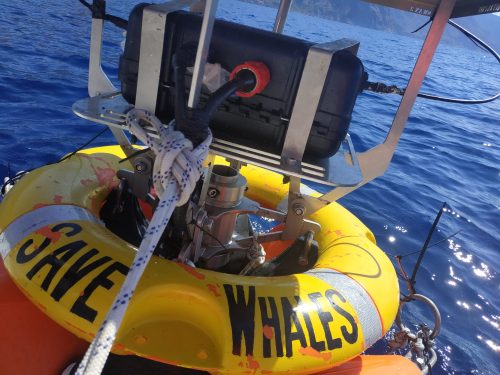
The Green Fund joins as new partner in the SAvE Whales project
A major step towards the implementation of the SAvE Whales initiative has been achieved with the inclusion of the Green Fund in the project's partnership. This development was formalized through the signing of an Addendum to the existing Memorandum of Understanding, strengthening the institutional basis and long-term sustainability of the effort to protect sperm whales in the Mediterranean.

Documenting Posidonia Restoration at Atzikiari Bay
The first episode of the ARTEMIS documentary series highlights pioneering restoration efforts in the Posidonia meadows at Atzikiari Bay, Crete, featuring the Hellenic Centre for Marine Research (HCMR), The Green Tank, and the project’s other partners.

The Green Tank participates in the European Commission’s Expert Group on Nature Credits
The Green Tank is a member of the European Commission's Expert Group on Nature Credits, contributing to discussions on the development of a credible framework for this innovative financing tool to support biodiversity protection and restoration.

The carbon footprint of electricity production – February 2026
In the first two months of 2026, the power generation sector emitted 2.89 million tons, a 17.2% decrease compared to the same period in 2025, though higher than in 2024 and 2023. Gas-fired power plants were responsible for more than half of overall emissions (1.49 million tons), while the lignite plant of Ag. Dimitrios was the top polluter with 0.8 million tons. The carbon intensity of electricity production stood at 246.2 g CO2/kWh.

The Green Tank Newsletter #1 | January–March 2026
We are delighted to launch our very first newsletter! Every quarter, we will share with you our most important updates, activities, and analyses on energy and climate policy, nature protection, and the transition to a truly sustainable future.

Trends in electricity production – February 2026
In the first two months of 2026, net exports reached a record high (2,356 GWh), which is linked to the fourfold increase in hydroelectric generation compared to 2025, as well as the significant rise in renewable energy, despite very steep curtailments in February (208 GWh or 8.7% of total RES production). The increase in clean energy also played a decisive role in reducing generation from fossil gas to a 9-month low, resulting in the average price on the wholesale electricity market falling to €78.4/MWh (-27.9%).

Energy Communities in Greece: Time to Revitalise the Sector
Greece was a pioneer in the institutional development of energy communities, passing legislation as early as 2018, even before the relevant European Directive. However, in its early stages, the framework fell victim to exploitation by companies, and today, facing limited grid capacity, it remains at a standstill. Statements by Nikos Mantzaris, co-founder and lead policy analyst at The Green Tank, to Valia Bazou for topontiki.gr.

Renewables and Large Hydropower Drive Electricity Prices Down
In February 2026, increased electricity production from wind and hydropower displaced significant amounts of fossil fuels. Compared to February 2025, renewable energy sources (wind and solar) grew by 20% (+300 GWh), while large hydropower plants produced five times more (+874 GWh). The combined increase of 1,174 GWh of clean energy led to a nearly equivalent reduction in fossil fuel use: fossil gas fell by 35% (-838 GWh) and lignite by 47% (-205 GWh).

The Green Tank participates in the ARTEMIS partners meeting in Sardinia
Two important and inspiring days for the ARTEMIS Interreg Euro-MED Natural Heritage project took place on 3–4 March 2026 in Santa Teresa Gallura, Sardinia, where partners met at the project’s Sardinian pilot site, the Capo Testa – Punta Falcone Marine Protected Area.
Trends in fossil gas consumption & imports – February 2026
Domestic gas consumption in February 2026 reached a three-month low (5.73 TWh). However, gas exports reached a three-year high of 1.88 TWh, due to an increase in exports from the Sidirokastro gateway. In the first two months of the year, LNG imports reached a historic high (10.2 TWh), while imports through Sidirokastro were 2.82 TWh, down 52.8% compared to the same period in 2025, marking a three-year low.


