

26/01/2026
As part of the State of Climate in Greece for 2025, conducted by scientists from the Institute for Environmental Research and Sustainable Development at the National Observatory of Athens and


As part of the State of Climate in Greece for 2025, conducted by scientists from the Institute for Environmental Research and Sustainable Development at the National Observatory of Athens and

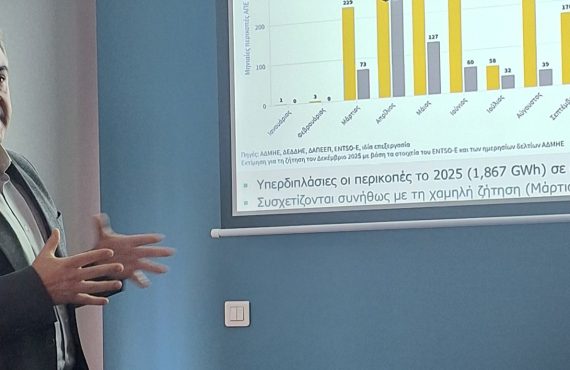
1,747 energy communities, but only 18 new project applications in 6 months. Central Macedonia is the “champion” in electrified capacity, while in Western Macedonia for every 1 MW electrified, 3.6
Despite the increase in electricity generation from Renewable Energy Sources (RES), Greece consistently remains among the most expensive countries in Europe in the day-ahead electricity market (DAM). According to a

Despite notable progress, 2024 saw an increase in emissions from power generation in Greece due to fossil gas and stagnation in industrial emissions. In contrast, the EU-27 achieved a 20-year

The Green Tank contributed to a major study assessing the governance of Protected and Conserved Areas (PCAs) worldwide. The study was led by a team from the International Institute for

Spending by vulnerable households in Greece is expected to increase by up to EUR 1.6 billion between 2027 and 2032 due to the implementation of the new Emissions Trading System

A new brief by The Green Tank analyzes the provisions of European legislation regarding capacity remuneration mechanisms (CRMs), outlines the technologies that other European countries are choosing to support via

Mapping the first open dialogue focusing on youth in just transition regions and their future in the post-lignite era.
However, the slowdown in both the electrification and new applications for self-production projects by citizens, energy communities and other stakeholders, recorded after the switch to the net billing scheme is

After years of stagnation, the two most polluting sectors of the Greek industry (cement production and refineries) are aiming to reduce their carbon footprint, in line with the NECP and


